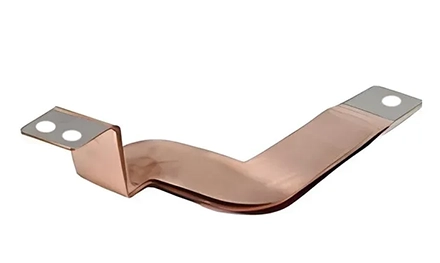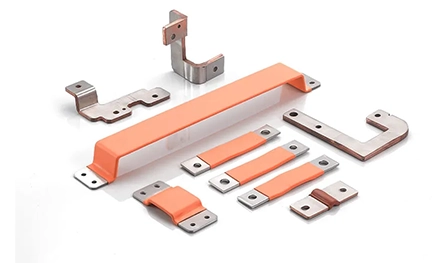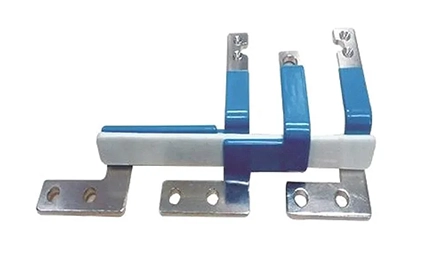


An energy storage connector is a specialized electrical connector designed to link battery modules, inverters, and other components in energy storage systems. These connectors ensure safe, efficient power transfer in applications like grid-scale battery banks, solar-plus-storage, and EV charging. For example, Haiyan New Energy describes its connectors as “specifically designed for use in energy storage systems” to provide “safe and efficient electrical connections in battery banks and other energy storage applications”. In practice, battery-storage connectors are typically high-current, high-voltage components used to interconnect cells or modules in a BESS. They allow heavy currents to flow with minimal loss while providing protective features (insulation, locking, etc.) to prevent faults. In short, energy storage connectors are the crucial link that safely delivers stored power within battery systems and to the grid or loads.
Modern energy-storage connectors are engineered for performance, safety, and durability. Typical key features include:
High current/voltage rating: Designed for very high power, many connectors handle up to 1,000–1,500 V DC and hundreds of amps. For instance, some battery plugs are rated 1500 V DC and 250–350 A, and advanced models support up to 2000 V DC.
Robust safety interlocks: To prevent misconnection and arcs, connectors often have locking tabs, push-button latches, or keying. Haiyan’s FJ6 series uses dual color-coded keys and a red push-button lock to eliminate polarity errors. Many designs provide touch-proof insulation and finger guards to meet IPxx or IP6x ratings.
Weatherproof construction: Outdoor or vehicle-mounted systems need dust/water protection. High-grade connectors are sealed to IP65/IP67, using gaskets and rigid housings. Haiyan’s connectors, for example, are IP67-rated, “no fear of harsh conditions such as moisture, dust, etc.”.
Durable materials: Contacts use high-conductivity copper alloys (brass, phosphor bronze, or beryllium copper) and robust plating (tin, silver or gold) to resist corrosion and wear. These materials ensure thousands of mating cycles without failure. Housings use rugged engineering plastics (nylon, PC, PBT) for insulation and flame resistance.
Low-resistance/high-efficiency: Large contact surfaces and thick conductors minimize voltage drop and heating at high currents. Many connectors are RoHS-compliant and UL/IEC-tested to ensure minimal power loss under load.
Ease of installation and maintenance: Quick-plug designs allow one-hand connecting and disconnecting without tools. Some use 360° twist-and-lock, snap-latches, or threaded bushings for secure yet serviceable joints. Clear feedback (clicks or visual indicators) confirms a proper mate.
Manufacturers often highlight compliance certifications alongside these features. For example, haiyan Electric notes its connector line is UL-, CE- and TÜV-certified, and Phoenix Contact offers connectors tested up to 1500 V with touch-safe designs. In practice, selecting a connector with the right combination of these features (current/voltage rating, IP rating, locking, etc.) is crucial for reliability in energy storage applications.
Energy storage connectors come in several basic designs tailored to how batteries are arranged. Common types include:
Plug-in (Battery-Pole) Connectors: Single-pole or multipole plug connectors attach directly to battery posts or cable ends. These “quick-plug” connectors use locking tabs or threaded collars for fast, tool-free connection/disconnection. For example, 360° quick-plug battery connectors are widely used in solar and wind storage systems because they let operators easily snap batteries together or apart.
Busbar (Bolt-On) Connectors: Rigid busbar blocks or bolt-type connectors join battery terminals to metal busbars in racks or modules. They often use silver-plated copper contacts with nylon shells and O-ring seals for durability. These connectors physically clamp onto a bus plate, providing a robust fixed link between cell groups and minimizing thermal rise under heavy loads.
Modular Multi-Pin (Hybrid) Connectors: For complex systems, connectors combining power and signal pins in one housing are used. These can carry DC power plus control or sensing lines. For instance, Phoenix Contact’s hybrid connectors support up to 1000 V DC with IP65/67 sealing and combine multiple 100 A power contacts plus low-voltage pins. Such modular plugs simplify wiring by integrating multiple circuits in one plug.
High-Voltage Specialty Connectors: Some connectors are designed for very high DC voltages or unique form factors. An example is Stäubli’s MC4-Evo stor couplers for PV+storage, rated at 1500 VDC (IEC 62852/UL 6703). These single-pole connectors have a 45° mating face to prevent mating with standard PV plugs. Similarly, Han® battery connectors (HARTING) and others offer heavy-duty multi-pin solutions for grid-scale storage.
Each type balances ease-of-use versus robustness. Plug-in/pole connectors prioritize fast swapping and modularity, while busbar connectors emphasize low resistance and strength. In large systems, a mix is often used: e.g. plug connectors on each battery module, feeding into fixed busbar assemblies that tie the pack together.
Connector materials are chosen for conductivity, strength, and insulation. Typical choices include:
Copper and Copper Alloys: The core contacts are usually high-conductivity copper. Brass (copper-zinc) is common for its balance of conductivity and stiffness, while phosphor bronze (copper-tin-phosphorus) adds wear resistance for repeated mating. Beryllium copper may be used in springy pins for both excellent conductivity and high fatigue life. For very lightweight or cost-sensitive designs, aluminum contacts are used (often in busbars), though aluminum is less conductive than copper.
Insulative Housings: Connector bodies and insulators use durable thermoplastics. Common choices are polyamide (nylon), polycarbonate (PC), and PBT, which resist heat, chemicals and impact. These plastics often meet UL94V-0 flammability standards. They form the outer shell, strain reliefs, and any non-conductive barriers. Additional sealing materials like silicone rubber gaskets or EPDM O-rings provide environmental protection.
Platings and Plugs: Contact surfaces are typically plated with tin, silver or gold to prevent oxidation and maintain low contact resistance. Gold-plated contacts (in small signals) offer peak reliability, while tin plating is an economical corrosion-resistant choice. Platings are especially important for the high-voltage DC pins used in energy storage, where stable low-resistance contact is crucial. Insulator inserts often use UL-approved materials (UL94V-0 rated) to ensure safety under fault conditions.
Mechanical Parts: Other materials like stainless steel, springs, or aluminum die-cast parts may be used for clamps, shells, or fixtures when extra strength or corrosion resistance is needed. For example, aluminium or stainless may be used in the external housing or locking mechanism.
By selecting optimal alloys and plastics, modern connectors achieve both excellent electrical performance and long operational life under vibration, heat and weather exposure. (For example, using phosphor-bronze contacts can ensure thousands of mating cycles, as noted by connector manufacturers.)
Connectors for energy systems must meet strict safety and performance standards. Key standards include:
UL/CSA Standards (North America): UL 1977 (Component Connectors) is a primary safety standard for connectors in battery and power systems. It covers single- and multi-pole connectors, ensuring they safely handle rated currents/voltages and prevent arcing or overheating. UL 94 (plastic flammability) is also commonly required for insulating parts. Many energy connectors carry UL listing or cURus certification to guarantee compliance with these benchmarks.
IEC / EN Standards (International): For global markets, IEC standards are important. For example, Staubli’s MC4-Evo stor connectors are certified to IEC 62852:2014 (safety of power connectors for PV-storage) and the equivalent UL 6703. While IEC 62852 is specific to PV + storage, many battery connectors follow IEC 60947-7-1/2 or UL 1977 for commercial storage. Additionally, EV battery and charging connectors follow ISO/IEC 62196 and SAE J1772/GB/T standards (though those cover EV charging, some principles overlap).
Automotive and Renewable Standards: In vehicle or hybrid applications, connectors may need to meet ISO 16750 (environmental conditions) or ISO 6469 (EV safety) requirements, and automotive-grade specifications for vibration and sealing. Sun-like solar array components (MC4, etc.) must meet IEC 62852 for safe DC connection up to 1500 V.
Regulatory Compliance: CE marking indicates compliance with EU directives (e.g. Low Voltage Directive for safety, RoHS for hazardous substances). Many connectors are tested to CE (EN) versions of UL standards or IEC standards. TÜV or RCM (Australia) approvals are also sought. As a rule, buyer-oriented products will be RoHS-compliant (no lead or hazardous Pb/PFOA) and certified for relevant markets.
In short, always verify that connectors carry the necessary certifications (e.g., UL/CSA listing, IEC ratings) for your region and voltage class. Haiyan’s connector lines, for example, note UL and CE certifications on their high-current models, reflecting adherence to industry standards.
Energy storage connectors are used wherever batteries and power electronics meet. Major applications include:
Battery Energy Storage Systems (BESS): In grid or backup storage, connectors tie individual modules and strings of batteries together and link them to inverter/charger units. They must support the total pack voltage/current safely. For instance, in large containerized storage, plug connectors join each cell rack and busbar connectors carry the heavy inter-rack currents. Haiyan notes uses in “large-scale energy storage power stations” and “battery clusters in battery containers”.
Renewable + Storage Hybrid Plants: In solar or wind farms with battery backup, connectors carry energy between panels, batteries, and inverters. Guchen Electronics highlights that connectors are used in home storage systems, solar power plants and wind turbines “to transfer electricity from the battery to the power grid or vice versa”. In these setups, quick-disconnect battery plugs allow maintenance of storage banks without shutting down generation.
Uninterruptible Power Supplies (UPS) & Telecom: Critical facilities use battery banks for backup. High-current connectors connect UPS modules and telecom backup batteries. Haiyan explicitly lists “Battery connection for large UPS, communication base station backup power” as a use case. Here reliability and quick-replacement are key, so designs often include finger-safe insulated housings.
Electric Vehicles (EVs) and Charging: While EV battery connectors (busbars inside packs) are often unique, the charging infrastructure shares similar needs. For DC fast chargers and onboard chargers, robust high-current connectors (up to 1000 V and 200–400 A) are required. Some EV charger connectors (e.g. CCS, CHAdeMO) have built-in communication pins. Though slightly different technology, the same principles of high-current, high-voltage safety apply. Some multi-pin storage connectors are even adapted for EV battery modules.
Grid and Industrial Equipment: Large power inverters, data-center UPS, and industrial machinery using batteries all require custom connectors. Any system linking a battery bank to a power bus or to a grid-tie inverter will use energy-storage connectors. Essentially, any application involving modular battery integration—from forklift trucks to off-grid microgrids—will employ connectors with the features discussed above.
In all cases, connectors provide a safe, reliable, and maintainable link. As Guchen notes, “The main function of a battery energy storage connector is to connect the batteries with the inverter or charge controller” to enable energy flow between storage and the grid.
Haiyan New Energy offers a range of high-performance connectors specifically for ESS applications. Their FJ6 series highlights many of the above features: they are built for very high currents, secure locking, and broad compatibility. For example, Haiyan’s literature emphasizes “high current capacity, secure locking mechanisms, and compatibility with various battery chemistries” for reliable power transfer. The advanced FJ6ZZ models add color-coded anti-misplug keys and a quick-release red button lock to prevent errors. They are ruggedized for the field – sealed IP67 – “no fear of moisture, dust, etc.” and rated for outdoor or vehicle battery use.
These connectors are used in demanding settings: large-scale energy storage (utility batteries), photovoltaic and wind systems with storage, and backup power installations. Each connector design can be modular (pole-style or busbar style) to fit the layout of the battery system. Haiyan also offers extensive customization: they can tailor contact sizes, cable lengths and plastic housings to customer drawings. In short, Haiyan’s connectors combine industrial-grade electrical capacity with safety features and the option to configure them for a specific system.
Choosing the right energy storage connector is vital for system performance and safety. The connector must match the system’s voltage, current, environment and safety requirements. As evidenced by Haiyan’s product line, a well-designed connector will provide reliable power transfer under high load and include safeguards like polarity keys and weatherproof seals. In practice, a top-quality connector – whether Haiyan’s or a peer’s – has high electrical ratings, robust locking and insulation, and compliance with UL/IEC standards. By selecting connectors engineered for energy storage (such as Haiyan’s series), system builders ensure their battery systems run efficiently and safely for the long term.
Q1: How do I choose the right energy storage connector?
Choose a connector based on your system’s voltage and current ratings, installation environment (indoor/outdoor), safety requirements (locking and anti-misplug features), and required certifications such as UL or IEC.
Q2: What voltage and current ratings are common for energy storage connectors?
Most energy storage connectors support high-voltage DC systems, typically ranging from 600V to 1500V DC, with current capacities from 100A to 350A or higher, depending on the application.
Q3: Are Haiyan energy storage connectors customizable?
Yes. Haiyan offers customization options including connector structure, contact size, insulation materials, and cable configurations to meet different energy storage system designs.
Q4: What safety features should an energy storage connector have?
Key safety features include secure locking mechanisms, anti-reverse or color-coded designs, touch-proof insulation, and high IP ratings (such as IP67) for reliable operation in harsh environments.
GET A QUOTE


 中文
中文 English
 Pусский
 Français
 Español