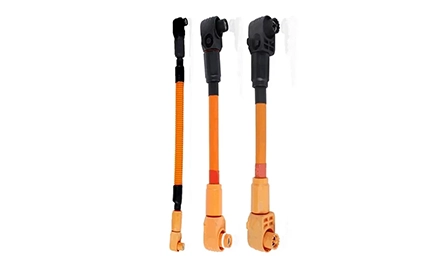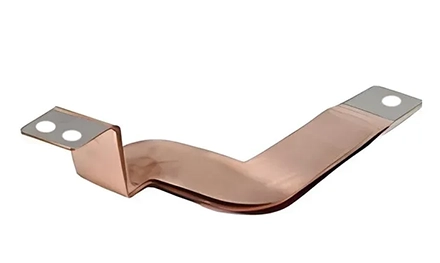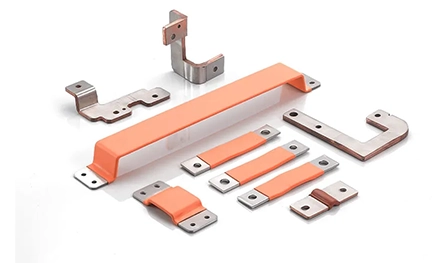


Busbars are critical components in electrical power distribution systems, providing a safe and efficient way to conduct electricity. Depending on the operating voltage level, busbars are generally classified into High Voltage (HV) busbars and Low Voltage (LV) busbars. Understanding their differences is essential for selecting the right solution for specific electrical applications.
High Voltage busbars are designed to operate at voltage levels typically above 1 kV, commonly used in power transmission and large-scale industrial systems. They are engineered to handle high electrical stress while maintaining insulation integrity and operational safety.
Operate at medium to high voltage levels (1 kV–36 kV or higher)
Require enhanced insulation and larger clearance distances
Designed to withstand high electric fields and thermal loads
Commonly made from copper or aluminum
Often combined with epoxy resin, air, or gas insulation
Surface treatments applied to reduce corona discharge and oxidation
Power substations and switchgear
Renewable energy plants (wind, solar farms)
Heavy industrial power distribution systems
Utility transmission and distribution networks
Low Voltage busbars operate at voltage levels up to 1 kV and are widely used in building power distribution and standard industrial equipment. They focus on compact design, flexibility, and ease of installation.
Rated for low voltage, high current applications
Shorter insulation distances required
Optimized for efficient current distribution and heat dissipation
Copper is most common for its high conductivity
Aluminum used where weight and cost reduction are priorities
Often uninsulated or insulated with PVC, epoxy, or heat-shrink materials
Distribution panels and switchboards
Commercial and residential buildings
Data centers and UPS systems
Low-voltage industrial control systems
| Aspect | High Voltage Busbars | Low Voltage Busbars |
|---|---|---|
| Voltage Level | > 1 kV | ≤ 1 kV |
| Insulation Requirement | Very high | Moderate to low |
| Size & Clearance | Larger | More compact |
| Safety Design | Advanced insulation and shielding | Simplified protection |
| Typical Use | Power transmission & substations | Building & equipment distribution |
Both high voltage and low voltage busbars play indispensable roles in modern electrical systems. Selecting the right busbar depends on operating voltage, current requirements, installation environment, and safety standards. A clear understanding of their differences helps engineers and project planners design more efficient and reliable power distribution systems.
Q1: Can low voltage busbars be used in high voltage systems?
No. LV busbars lack the insulation and clearance needed to safely operate at high voltage levels.
Q2: Which material is better for busbars, copper or aluminum?
Copper offers higher conductivity and compact size, while aluminum is lighter and more cost-effective. The choice depends on performance and budget requirements.
Q3: Are HV busbars always insulated?
Yes, HV busbars require robust insulation systems to prevent electrical breakdown and ensure safe operation.
Q4: Where are LV busbars most commonly used?
They are widely used in distribution boards, switchgear, data centers, and commercial or residential power systems.
Q5: How do I choose between HV and LV busbars?
Selection depends on system voltage, current rating, safety standards, installation space, and application type.
GET A QUOTE


 中文
中文 English
 Pусский
 Français
 Español