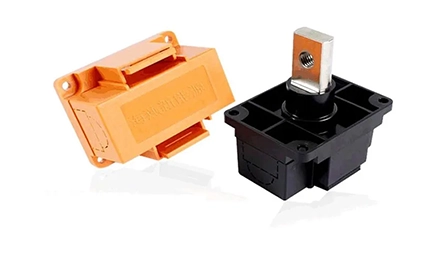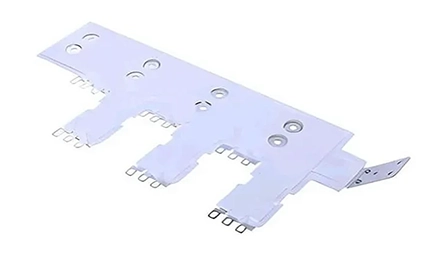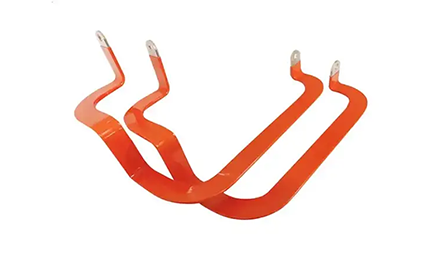


You're building a battery bank or a grid-scale storage system, and the connection between modules is where the power actually moves. An Energy Storage Connector is the component that carries that current safely, locks into place, and keeps moisture and dust out. This article explains what these connectors do, the features that keep them reliable, and how to think about selection when you're specifying one for a battery system.
An energy storage connector is a specialized electrical connector designed to link battery modules, inverters, and other components in energy storage systems. These connectors ensure safe, efficient power transfer in applications like grid-scale battery banks, solar-plus-storage, and EV charging. In practice, battery-storage connectors are high-current, high-voltage components used to interconnect cells or modules in a BESS. They allow heavy currents to flow with minimal loss while providing protective features like insulation and locking to prevent faults.
The connector sits at every junction where power moves between modules. In a rack of battery packs, you'll find connectors linking each module to the next, and then linking the rack to the inverter or the DC bus. Each of those connections has to handle the full system current without heating up, loosening under vibration, or letting contaminants reach the contact surface.
A connector is a small fraction of a system's bill of materials, but it sits in the path of every amp the system delivers. A loose connection creates resistance, resistance creates heat, and heat degrades both the connector and the battery module it's attached to. That chain is why connector selection gets attention in BESS design — it's a reliability decision, not just a sourcing decision.
To prevent misconnection and arcs, connectors often have locking tabs, push-button latches, or keying. A typical high-current connector uses dual color-coded keys and a red push-button lock to eliminate polarity errors. Touch-proof insulation and finger guards are common, meeting IPxx or IP6x ratings so that live contacts aren't exposed during maintenance.
The locking mechanism matters in battery systems because vibration and thermal cycling are constant. A connector that doesn't lock positively can work loose over thousands of cycles. Push-button latches with clear feedback — a click or a visual indicator — let technicians confirm a proper mate without guessing.
Outdoor or vehicle-mounted systems need dust and water protection. High-grade connectors are sealed to IP65/IP67, using gaskets and rigid housings. An IP67 rating means the connector resists dust ingress and temporary immersion, which matters for solar-plus-storage installations, EV charging cabinets, and mobile battery systems.
The housing material contributes to that protection. Rugged engineering plastics like nylon, PC, or PBT provide insulation and flame resistance, while the sealing gaskets keep moisture away from the contacts.
| Feature | Typical Specification |
|---|---|
| Rated voltage | Up to 1,500 V DC |
| Current capacity | Hundreds of amps |
| Ingress protection | IP67 |
| Contact material | High-conductivity copper alloy |
| Plating options | Tin, silver, or gold |
| Housing material | Nylon, PC, or PBT |
| Safety interlock | Dual color-coded keys + push-button lock |
| Certifications | UL, CE, TÜV |
Contacts use high-conductivity copper alloys — brass, phosphor bronze, or beryllium copper — with robust plating in tin, silver, or gold. These materials ensure thousands of mating cycles without failure. The plating choice affects both conductivity and corrosion resistance. Tin is economical and works well in moderate environments. Silver offers lower contact resistance and better performance at high currents. Gold resists oxidation and is used where signal integrity or very low resistance matters.
Large contact surfaces and thick conductors minimize voltage drop and heating at high currents. Many connectors are RoHS-compliant and UL/IEC-tested to ensure minimal power loss under load. In a battery system, every milliohm of contact resistance translates to wasted energy and extra heat, so contact design directly affects system efficiency.
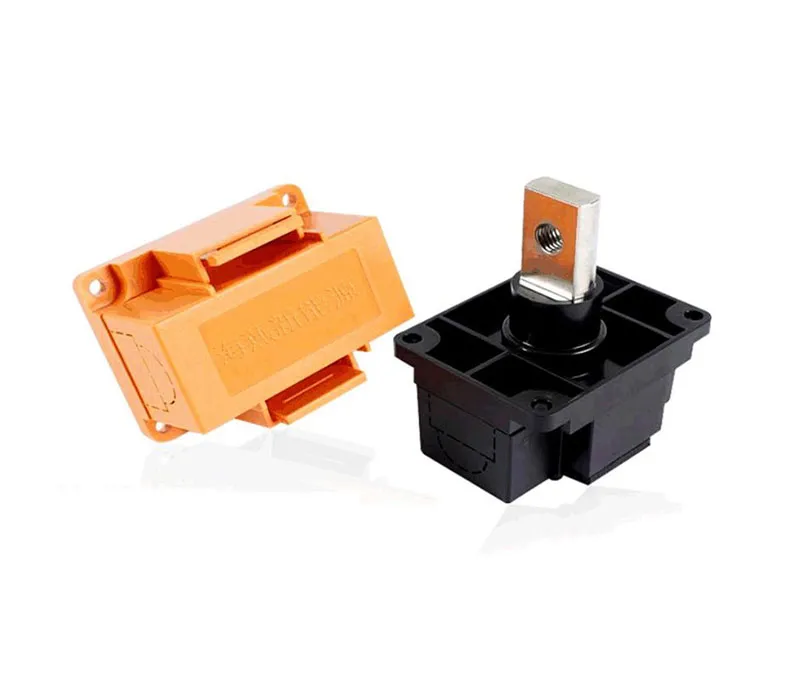
Energy storage connectors show up wherever batteries are linked into a larger system. That includes high and low voltage electrical appliances, vacuum electrical appliances, mining explosion-proof equipment, new energy vehicles, transportation systems, and new power grid systems. The common thread is a need for a secure, low-resistance connection that survives vibration, temperature swings, and outdoor exposure.
An Energy Storage Connector like the FJ6Ls from Haiyan New Energy is built for these environments. The FJ6 series uses dual color-coded keys and a red push-button lock to eliminate polarity errors, and the connector carries an IP67 rating that protects against moisture and dust. The product is designed specifically for linking battery modules and energy storage systems, with compatibility across various battery chemistries.
Match the connector's voltage and current ratings to your system's maximum values, with margin for transients. Check the IP rating against the installation environment — indoor cabinets may need less sealing than outdoor racks. Verify the locking mechanism suits your maintenance routine: push-button latches are faster to service, while threaded connections resist vibration differently. And confirm the contact plating matches your expected mating cycles and environmental exposure.
Haiyan New Energy produces the FJ6Ls connectors on advanced digital production lines, with metal copper and aluminum profile manufacturing. Customization is available based on user drawings, and the company provides technical evaluation and sample production before full orders.
Storage connectors are designed for higher continuous currents and higher DC voltages than general-purpose power connectors. They also include safety interlocks, polarization features, and IP sealing that standard connectors may lack. In a battery system, those features prevent the misconnection and moisture ingress that lead to faults.
IP65 protects against dust and low-pressure water jets. IP67 adds protection against temporary immersion. For outdoor racks, washdown areas, or vehicle-mounted systems, IP67 is the safer choice. For indoor cabinets in controlled environments, IP65 may be adequate. The FJ6Ls carries an IP67 rating, covering both scenarios.
Yes. Haiyan New Energy can customize connectors according to user drawings. The process includes technical evaluation of the drawing and sample production before full manufacturing. If your battery module layout requires a specific angle, cable length, or mounting configuration, the connector can be adapted.
Look for UL, CE, and TÜV marks, which indicate the connector has been tested to recognized safety and performance standards. These certifications matter for system-level approvals and for insurance and compliance reviews. The FJ6 series carries these marks.
An Energy Storage Connector should match your system voltage, continuous current, environmental exposure, and module layout. The FJ6Ls Connectors For Energy Storage Systems from Haiyan New Energy use dual color-coded keys, a red push-button lock, IP67 sealing, and copper alloy contacts. They're built for battery modules and energy storage systems across grid, vehicle, and industrial applications. If you're specifying connectors for a BESS or battery module assembly, send us your drawings and system parameters — we'll evaluate the requirements and confirm the right configuration before production.
GET A QUOTE


 中文
中文 English
 Pусский
 Français
 Español