

You're specifying conductors for a high-current distribution system, and the choice between copper and aluminum comes down to a trade-off you can't ignore. Copper conducts better per unit of cross-section. Aluminum weighs roughly one-third as much and costs significantly less. A Aluminum Busbar made from 6101 alloy sits at the center of that trade-off—delivering conductivity above 56% IACS while cutting weight by approximately 50% compared to copper for the same current-carrying capacity. This article explains how 6101 alloy achieves that balance, what profiles and custom shapes are available, and which applications benefit most from the switch.
Aluminum has been used as an electrical conductor since the early days of the power industry. Its density is about 30% that of copper, and its conductivity is roughly 60% of copper's on a volume basis. That means an aluminum conductor needs a larger cross-section to carry the same current—but even after upsizing, it still weighs about half as much as the equivalent copper bar. For weight-sensitive applications like electric vehicles, that difference matters. For cost-sensitive applications like switchgear and distribution panels, the savings can exceed 60%. Aluminum also dissipates heat rapidly, which helps manage temperature rise in enclosed spaces.
In electric vehicles and charging infrastructure, every kilogram counts. An aluminum conductor that matches copper's current capacity at half the weight reduces the load on mounting structures and simplifies installation. In enclosed switchgear, lower weight makes assembly and maintenance easier.
The cost advantage of aluminum over copper is substantial. For applications where space is not the primary constraint, aluminum busbar delivers the required conductivity at a fraction of the material cost. The 6101 alloy is specifically formulated to maintain that cost advantage without compromising mechanical integrity.
6101 is a heat-treatable aluminum alloy containing magnesium and silicon. After proper heat treatment (typically T6 temper), it develops mechanical properties that approach those of copper busbar while retaining the high conductivity that electrical applications demand. The alloy achieves electrical conductivity of at least 56% IACS, with some production runs reaching 58.8% IACS. Tensile strength is rated at 185 MPa minimum, with yield strength at 150 MPa minimum. These properties make 6101 suitable for structural busbar applications where the conductor also carries mechanical loads.
The alloy contains 0.30–0.70% silicon and 0.35–0.80% magnesium. These elements form magnesium silicide precipitates during heat treatment, which strengthen the aluminum matrix without severely degrading electrical conductivity. The balance between strength and conductivity is controlled through composition and tempering.
Higher strength in aluminum alloys often comes at the cost of conductivity. 6101 is formulated to minimize that trade-off. Its conductivity remains above the 56% IACS threshold required for busbar applications, while its tensile and yield strengths provide the mechanical stability needed for mounting and short-circuit withstand.
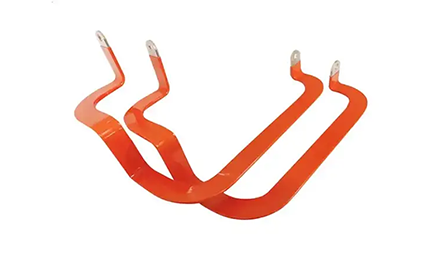
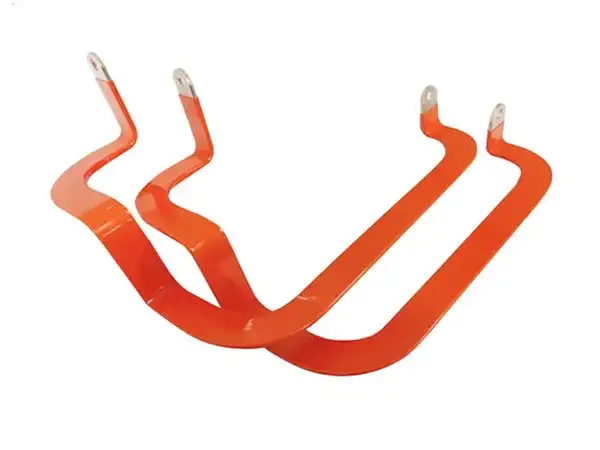
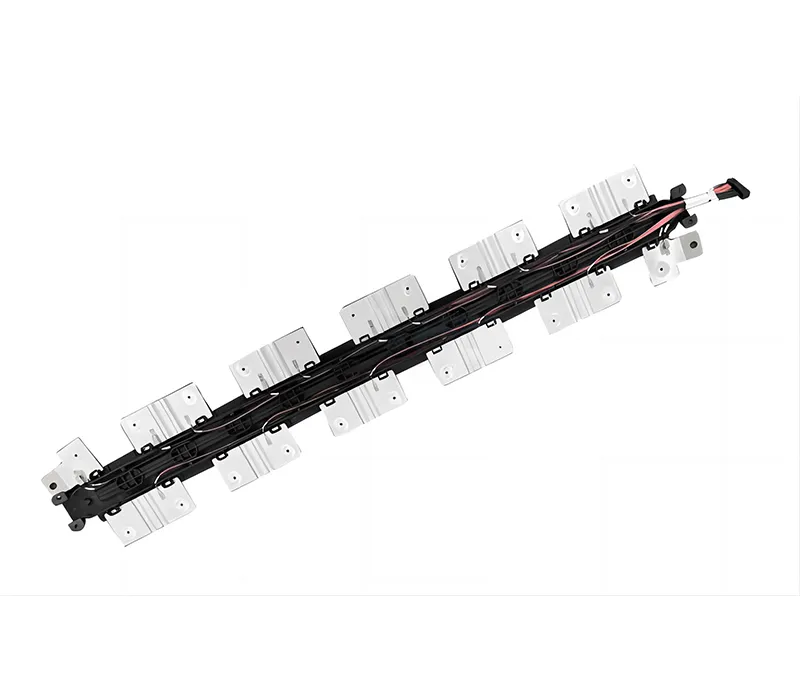
6101 aluminum busbar is available in a range of standard cross-sectional shapes, including rectangular and round profiles. The material can also be extruded or machined into irregular shapes to match specific installation constraints. Custom profiles allow designers to route high-current conductors through tight spaces, integrate mounting features directly into the bar, and reduce assembly part counts.
| Property | 6101 Aluminum Busbar | Copper Busbar (Reference) |
|---|---|---|
| Electrical Conductivity | ≥56% IACS | ~100% IACS |
| Density | ~2.7 g/cm³ | ~8.9 g/cm³ |
| Tensile Strength | ≥185 MPa | ~200–250 MPa |
| Weight for Equal Current | ~50% of copper | Baseline |
| Relative Material Cost | Significantly lower | Baseline |
| Corrosion Resistance | Good | Good |
Rectangular bar is the most common profile for busbar applications, offering a flat surface for bolted connections and efficient use of space in switchgear. Round bar is used where the conductor must pass through circular openings or where bending is required.
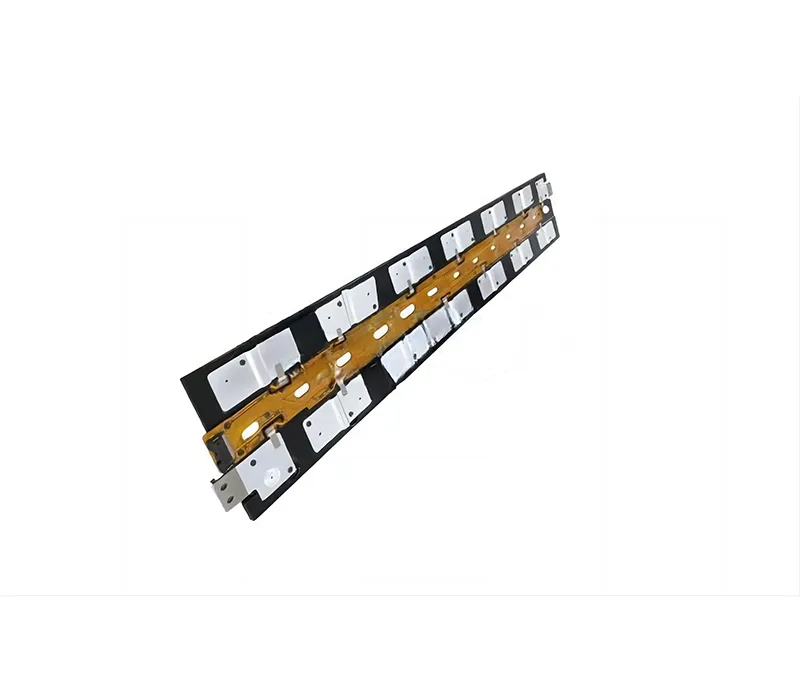
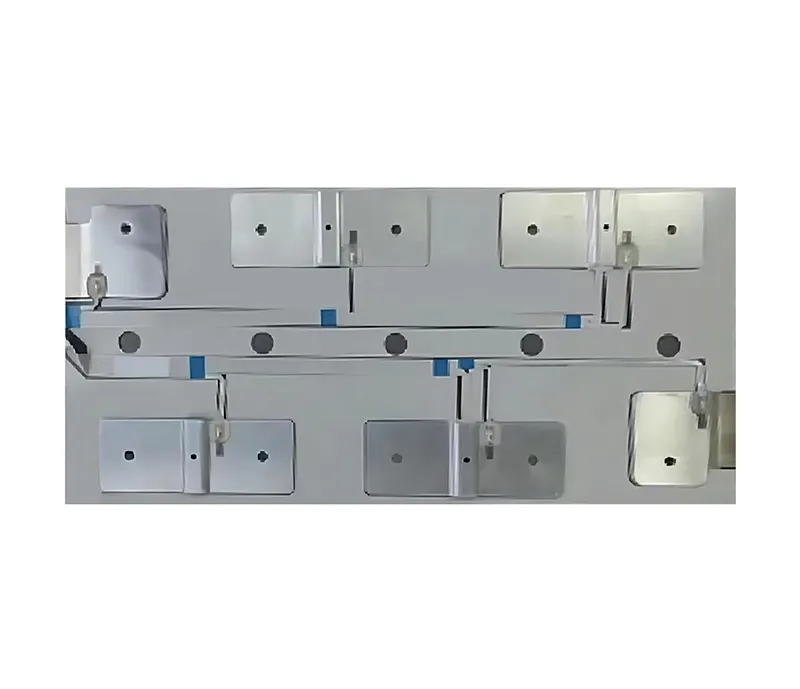
When a standard profile doesn't fit, 6101 can be extruded or machined into custom shapes. This is particularly useful in new energy vehicle battery packs and charging modules, where the busbar must conform to the available space and integrate with existing mounting points.
The 6101 alloy is used across a range of industries where weight, cost, and conductivity must be balanced. New energy vehicles and charging infrastructure are among the fastest-growing applications, driven by the need to reduce vehicle weight and extend range. Switchgear and power distribution panels use aluminum busbar to reduce material cost and simplify assembly. Renewable energy systems, including solar and energy storage, also rely on aluminum conductors for DC and AC connections.
New energy vehicles — battery pack interconnects, high-voltage distribution boxes, charging modules
EV charging infrastructure — power modules and connector busbars
Switchgear and distribution panels — main busbars and branch conductors
Renewable energy systems — solar combiner boxes and energy storage racks
Industrial electrical equipment — vacuum appliances, mining explosion-proof enclosures, transportation systems
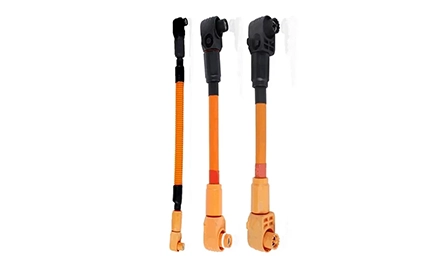
EV battery packs and charging modules require conductors that carry high current, fit within tight spaces, and add minimal weight. 6101 aluminum busbar meets these requirements, and its weldability allows it to be joined to terminals and connectors without complex processes.
In switchgear and distribution panels, aluminum busbar reduces the weight of the assembly and lowers material cost. The 6101 alloy's mechanical strength provides adequate support for bolted connections, and its conductivity keeps resistive losses within acceptable limits.
Yes. The 6101 alloy has good corrosion resistance, and when properly finished or plated, it performs well in outdoor and humid environments. For coastal or highly corrosive locations, additional surface protection may be specified.
The T6 temper is the standard for 6101 busbar. It provides the best combination of strength and conductivity. Other tempers may be available for specific forming or bending requirements.
Aluminum has a lower melting point than copper, and its thermal expansion is higher. For short-circuit withstand, the busbar must be sized to handle the let-through energy without exceeding temperature limits. The larger cross-section required for equal conductivity also helps with thermal mass.
Aluminum forms a natural oxide layer that protects against corrosion. The main maintenance concern is the connection interface: aluminum-to-copper connections require appropriate transition methods to prevent galvanic corrosion. Periodic inspection of bolted joints is recommended.
A Aluminum Busbar made from 6101 alloy delivers conductivity above 56% IACS at roughly one-third the weight of copper, with custom profiles available to match your installation. Zhejiang ZHONGYAN New Energy Co., Ltd produces 6101 aluminum busbar using advanced digital production lines, offering die-cutting, stacking, molecular expansion welding, and insulation processes for high and low voltage electrical appliances, new energy vehicles, and power grid systems.
Contact ZHONGYAN for a custom busbar configuration assessment → their team can review your drawings, recommend the right profile and temper, and supply samples for validation. Get an Aluminum Busbar that balances conductivity, weight, and cost for your specific application.
GET A QUOTE


 中文
中文 English
 Pусский
 Français
 Español