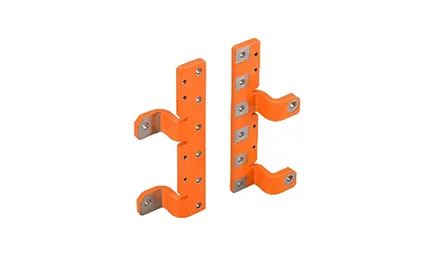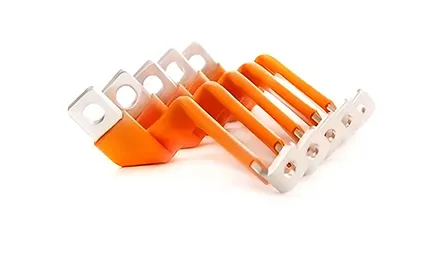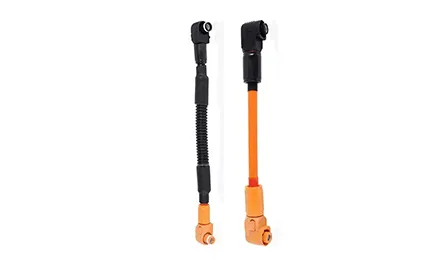


A bent metal profile sealed in a continuous epoxy cover, except where the terminals and bolt faces have to meet another part. Rigid Busbar construction keeps the live surface insulated along its length, while leaving the connection points bare so a bolt, stud, or lug can clamp onto clean metal. Here's how that split works, what the wrap survives, and how a custom unit is made.
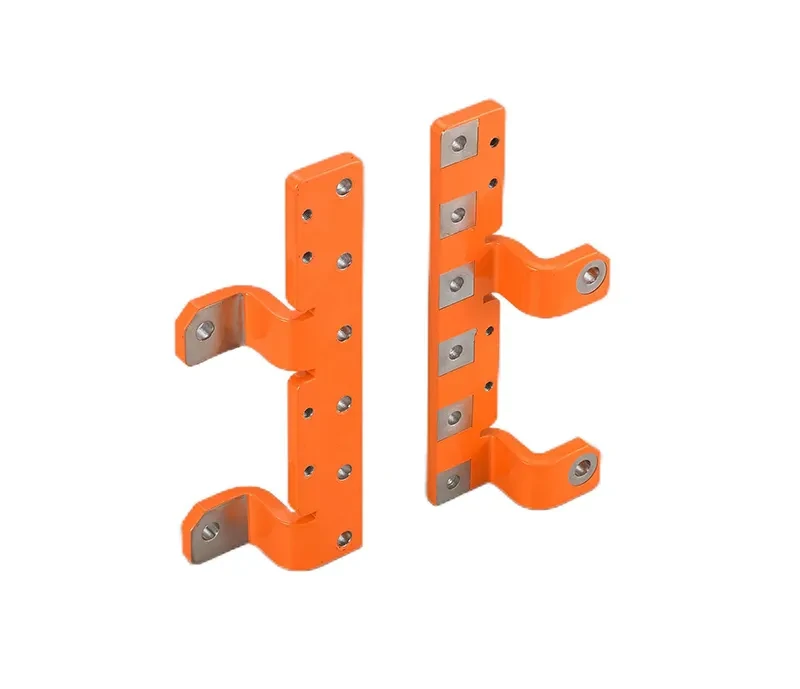
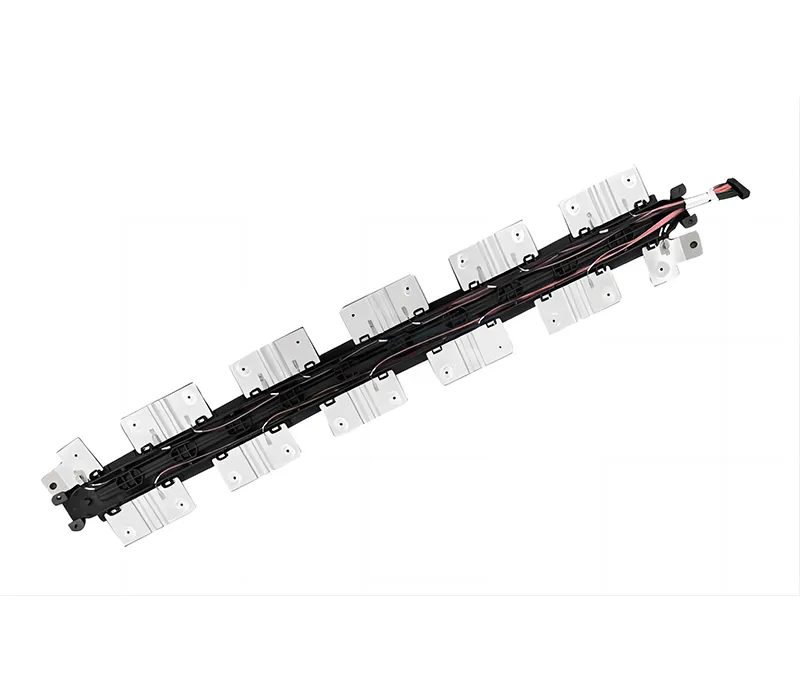
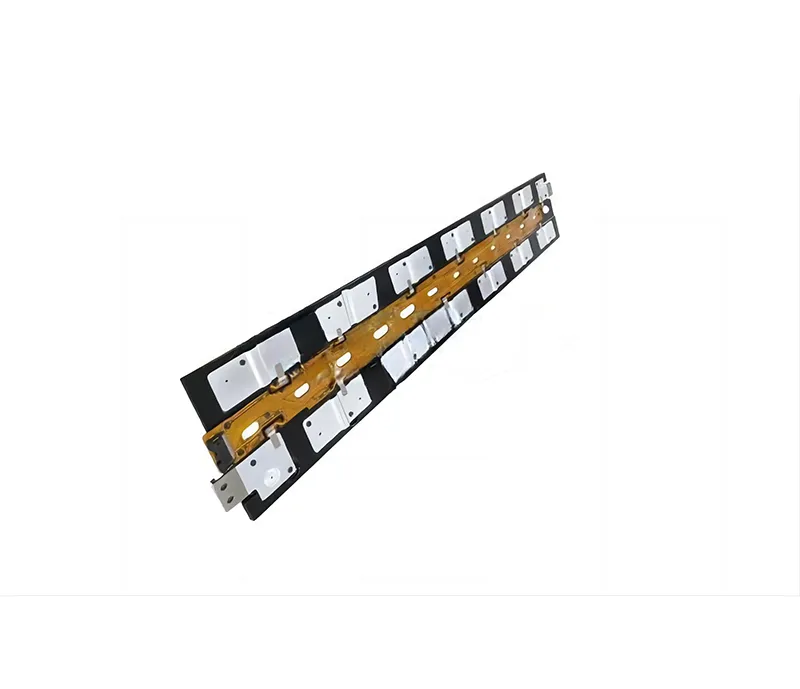
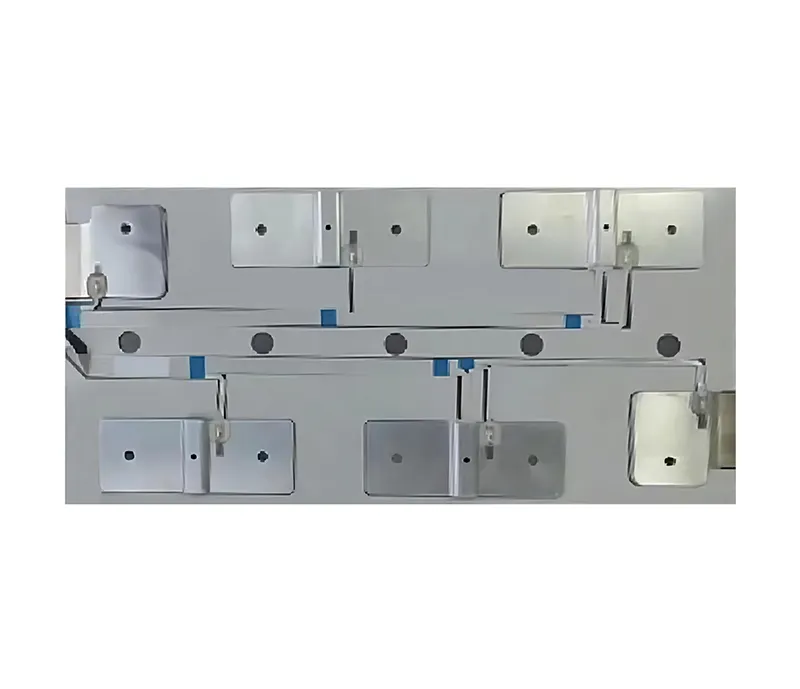
On the finished bar, the exposed parts are the terminal faces and the bolt mounting surfaces where the bar fastens to another conductor, an appliance terminal, or an enclosure bushing. The epoxy follows the bends and the straight runs, but it stops short of the drilled holes and the contact pads, so the joint lands on bare copper or aluminum rather than on a coated edge. The images show the same split: orange insulation along the body, silver metal squares and holes at each connection point.
A bolted joint needs clean, conductive metal to carry current and hold torque. If insulation covered the contact face, the bolt would press against resin instead of the conductor, raising contact resistance and weakening the clamp. Leaving the terminal bare keeps the electrical path solid, while the wrapped body still separates the bar from neighboring parts against leakage, short circuit, and arc risk.
The conductor runs on copper, aluminum, and comparable profile materials listed on the order. The choice depends on current path, weight, and budget for the application, while the exposed terminal faces are finished in the same metal as the body, ready for a lug or stud to fasten to.
The insulation uses an epoxy resin full-wrapping technology built around a powder spraying process. The sprayed coat cures into a uniform, dense layer that follows the bent profile, including bends and mounting positions, with the terminal areas masked or left open so the bare contact surface remains. The process list also includes extrusion, injection molding, plastic dipping, powder dipping, spraying, and industrial heat shrink tubing, so the insulation method can match the shape and exposure of the particular bar.
The epoxy coating works stably across an extreme range from -40°C to 180°C. That covers both cold-start conditions and the heat built up near power electronics, battery assemblies, and outdoor renewable installations, where a sleeve that cracks in winter or softens in summer would fail before the conductor does.
The insulation layer resists chemical erosion from salt spray, acid, alkali, and oil, and it keeps performance stable after long-term exposure to harsh environments. That matters in coastal equipment, mining sites, and industrial rooms where cleaners, fluids, and humid air reach the parts between maintenance visits.
The conductor itself goes through die-cutting and stacking and molecular expansion welding, then follows the shape requested for the assembly. Shapes are customized, and irregular shapes are processed rather than forced into a standard straight bar. The workflow starts from the user's drawing: the drawings are sent in, the technical team evaluates them, and samples are made before production, so the bend angles, terminal positions, hole spacing, and which faces stay bare all match the enclosure they'll land in.
The table groups the conductor, insulation, service range, and process exactly as listed, so an engineer can match the bar to the assembly before a drawing is sent for evaluation.
| Item | Detail |
|---|---|
| Product | Epoxy Insulated Busbar |
| Category | Rigid Busbar |
| Conductor material | Copper, aluminum, etc. |
| Insulation | Epoxy resin full wrap, powder spraying |
| Connection faces | Terminal faces and bolt mounting surfaces left exposed |
| Temperature range | -40°C to 180°C |
| Chemical resistance | Salt spray, acid, alkali, oil; anti-aging |
| Shape | Customized; irregular shapes processed |
| Forming processes | Die-cutting and stacking, molecular expansion welding |
| Insulation processes | Extrusion, injection molding, plastic dipping, powder dipping, spraying, industrial heat shrink tubing |
| Applications | High/low voltage appliances, vacuum appliances, mining explosion-proof, NEV, transportation, new power grid; wind power, photovoltaics |
| Customization | Per user drawings; technical evaluation and samples |
The made-to-order checklist collects the details a drawing usually leaves out. On the electrical side it records the function — earthing or grounding conductor versus power conductor — nominal current, AC or DC, nominal voltage, and any insulation specification required. On the environment side it records ambient temperature, operating temperature, maximum conductor temperature, and humidity. The conductor section records cross section, flat or round section, width, thickness, length, and quantity, plus whether the customer can supply a drawing, a specification, or samples.
Zhejiang ZHONGYAN New Energy Co., Ltd. runs an advanced digital-technology production line that manufactures metal copper and aluminum profiles and processes metal products to customer requirements across industries. That setup turns raw profiles into bent, welded, and insulated bars rather than stocking a single standard length, which is why the checklist centers on dimensions and electrical parameters instead of a fixed catalog size.
The HAIYAN line from Zhejiang Zhongyan New Energy Co., Ltd. supplies the Epoxy Insulated Busbar as a made-to-order rigid conductor, with the epoxy wrap, material choice, exposed terminal layout, and shape worked out against the customer's drawing. Related insulated options in the same range include epoxy powder coated busbars insulation, and the team follows the drawing-evaluation-sample sequence before series production.
Send these so the technical evaluation can start without a second round of questions:
A Rigid Busbar order is settled by the conductor dimensions and the load first, so the drawing and electrical parameters narrow the insulation choice before production.
Put the drawing or sketch, the conductor material, and the nominal current in the first note. Those three decide the shape and the insulation path; voltage, temperature, and environment follow after.
Send them through our request a quotation form and we'll come back with a Rigid Busbar evaluated to your assembly, with samples worked out before the production run.
GET A QUOTE


 中文
 English
 Pусский
 Français
 Español