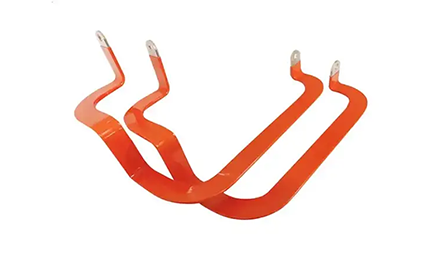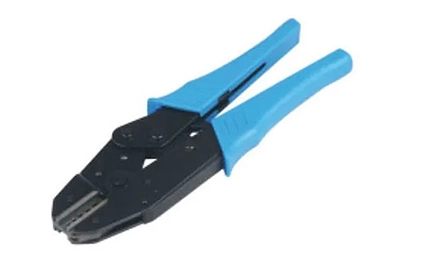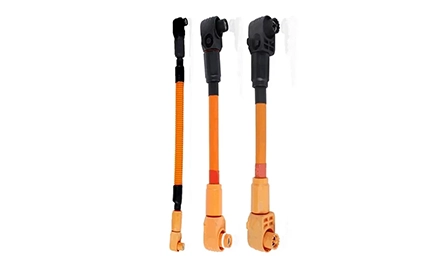


A switchgear assembler in Germany spent 12 minutes per cabinet installing terminal blocks for cable connections. Each terminal needed stripping, crimping, torquing, and inspection. Across 500 cabinets per year, the labor cost exceeded €40,000. The solution was a flexible busbar that connects directly from the main bus to the circuit breaker—no terminal block, no cable lug, no crimping.
A flexible busbar is an electrical conductor made from multiple thin layers of electrolytic copper laminated together. Unlike rigid busbars that require precise drilling and fixed mounting points, a flexible busbar can be bent and shaped by hand to fit any layout. Unlike cable bundles, it requires no terminal blocks, no crimped lugs, and no torque‑tightened screws at the connection point.
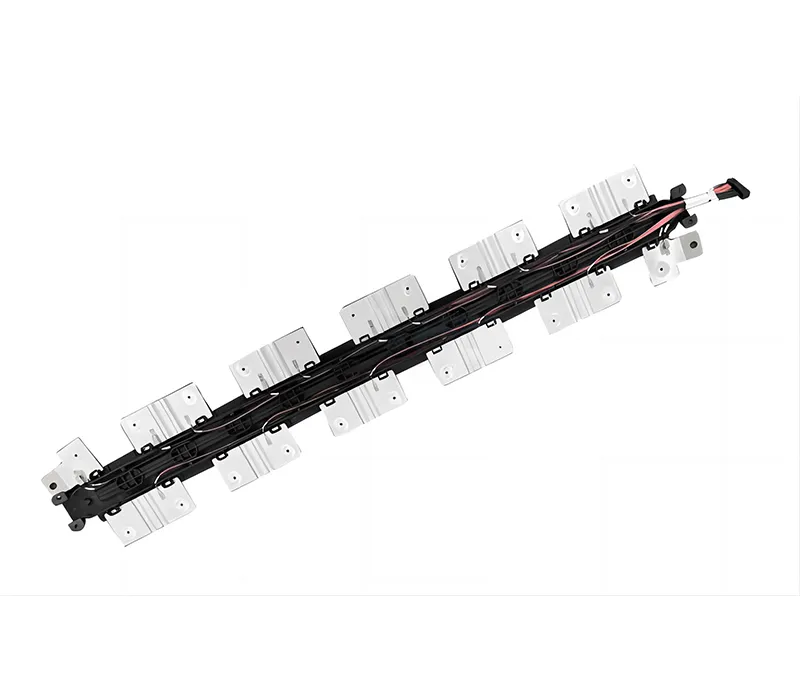
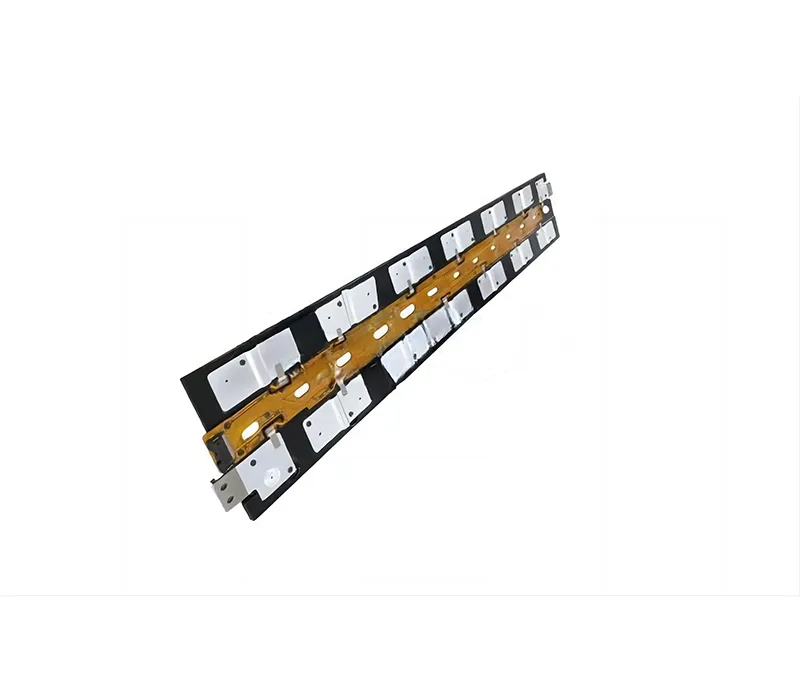
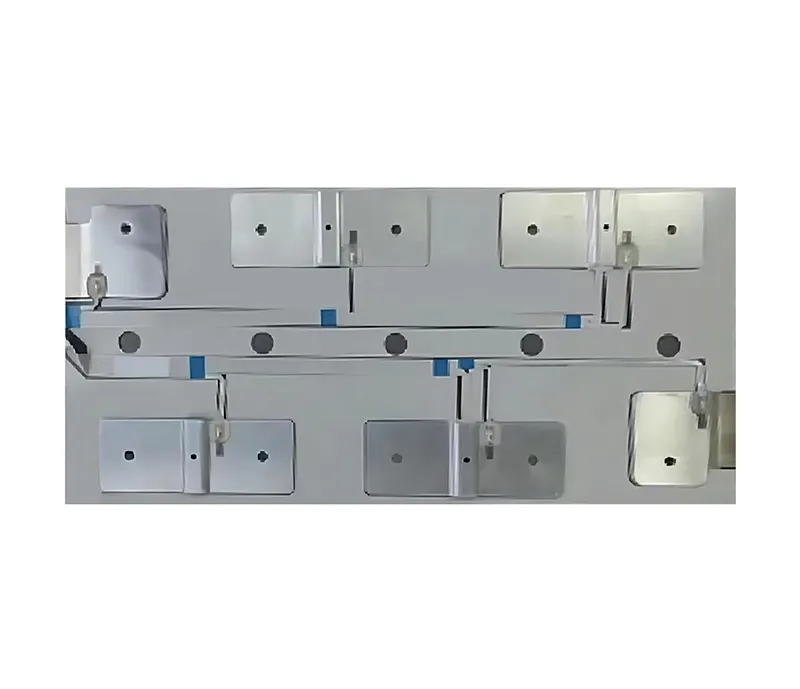
Haiyan's flexible busbar is constructed from multi‑layer thin electrolytic copper, with common and tinned options available. The connection is achieved by directly piercing the laminated copper sheet—no need to purchase terminal blocks, which eliminates faulty connection problems and makes installation more convenient and fast. The product range spans from 24mm to 1200mm in width, covers applications from small battery modules to large industrial switchgear, and is rated for nominal voltages of 1000VAC and 1500VDC with an operating temperature range of -25℃ to 105℃. This article explains why direct piercing eliminates the failure points that terminal blocks introduce, how 99.9% purity copper and self‑extinguishing insulation contribute to reliability, and where the width range fits different busbar layouts from battery packs to main distribution panels.
The term “flexible busbar” covers two distinct constructions: laminated (stacked foil) and braided (woven wire). Each has its place, but for most power distribution applications, laminated busbars are the superior choice.
A braided flexible busbar is made by weaving or braiding multiple fine copper wires together, which provides excellent flexibility and is useful in environments with frequent movement or vibration. However, the woven structure creates air gaps between strands, increasing resistance and reducing current-carrying capacity. Strands can break individually under repeated flexing, progressively increasing resistance until the busbar fails.
A laminated flexible busbar consists of stacked layers of thin copper strips pressed together at the ends and left flexible in the middle. The laminated structure eliminates air gaps—the current density across the termination is uniform, so no single strand carries the full load. Individual foils slide against each other during bending, distributing mechanical stress across the entire cross‑section rather than concentrating it on individual strands. This results in up to 30% lower impedance compared to braided alternatives, better heat dissipation, and longer service life under vibration.
| Feature | Laminated (Stacked Foil) | Braided (Woven Wire) |
|---|---|---|
| Current density | Uniform across entire cross‑section | Concentrated on strands |
| Impedance (high frequency) | Lower (30% reduction typical) | Higher (skin effect on strands) |
| Mechanical stress distribution | Distributed across all foils | Concentrated on individual strands |
| Vibration resistance | Excellent (no loose parts) | Strands break over time |
| Failure mode | Gradual (wear visible at edges) | Sudden (strand fracture) |
| Best for | Power distribution, battery packs, inverters | Grounding straps, low‑current applications |
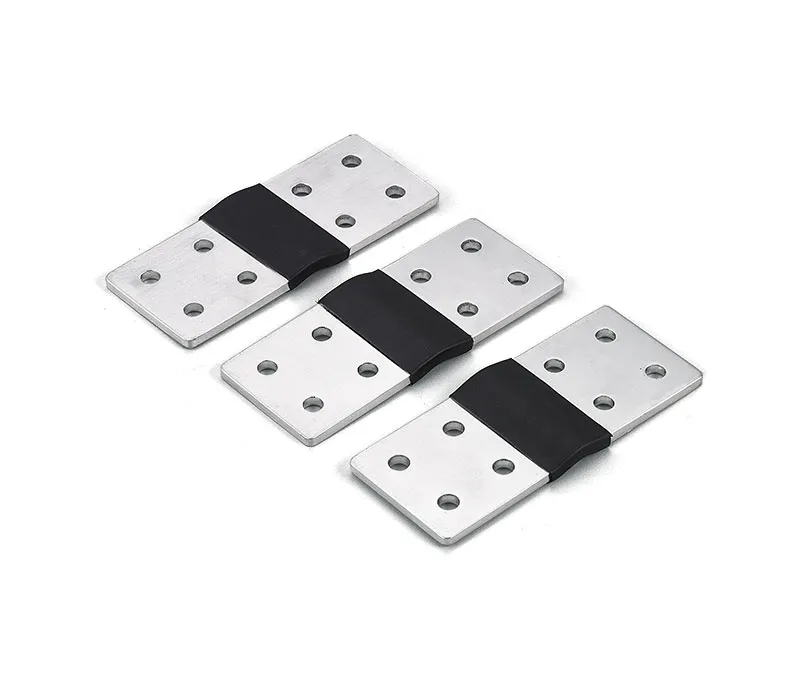
The Haiyan flexible busbar uses the laminated construction. Each flexible conductor is composed of multi‑layer thin electrolytic copper, stamped and pressed at the termination ends to create a solid bonding pad. The flexible section retains its ability to bend, twist, and fold while the terminations remain rigid enough to bolt directly to equipment terminals. The result is a connector that carries full rated current without the resistance drift that plagues braided straps after months of vibration.
A conventional cable connection requires at least three components: the cable lug, the terminal block, and the mounting screw. Each component introduces a potential failure point. The lug must be crimped correctly—an under‑crimped lug will loosen, an over‑crimped lug breaks strands. The terminal block must be torqued to spec—under‑torqued, it loosens; over‑torqued, it strips the thread. The screw must be tightened in the correct sequence—wrong order, uneven pressure leads to hot spots.
A flexible busbar eliminates all of these. The termination pad is an integral part of the busbar, formed by pressing the laminated copper foils together under high pressure, creating a solid, gas‑tight connection. The installer bolts the termination pad directly to the equipment terminal—no terminal block, no crimping tool, no torque wrench. The connection is as simple as bolting a rigid busbar, but the flexible section allows the busbar to conform to the layout.
For a battery pack with 100 cells, eliminating the terminal blocks and crimped lugs removes 200 potential failure points. Each removed component reduces the mean time between failures. The direct‑pierce connection also eliminates the contact resistance of the lug-to-terminal interface, which can be 0.1‑0.2mΩ per connection. For a system with 10 connections in series, those 1‑2mΩ of resistance can cause localized heating that degrades nearby components.
The flexible busbar is directly connected, thus eliminating the cable lug connection, providing excellent vibration resistance, and eliminating crimping. Because the termination is integral to the conductor, the installer cannot mis‑crimp it. The only variable is the torque applied to the mounting bolt—and that is a standard skill for any electrician.
A flexible busbar that passes a visual inspection can still have a pinhole in the insulation. That pinhole may not cause an immediate short. Over months of thermal cycling, moisture wicks through the hole, the copper corrodes, and the insulation delaminates around the defect. The result is a phase‑to‑ground fault that trips the main breaker and shuts down an entire production line.
Haiyan performs a 100% dielectric test on every flexible busbar before shipment. Each unit is placed in a test fixture, and a high voltage is applied between the conductor and a conductive pad pressed against the insulation surface. The busbar passes only if there is no dielectric breakdown, no arcing, and no current leakage beyond the test threshold. This test is performed on 100% of production, not just on a sample batch. The quality control process also includes a quality tracking number and assigned part number, ensuring full traceability from the raw copper coil to the finished busbar.
For a busbar in an EV battery pack or an energy storage system, this hipot test is also a requirement of the final system certification (IEC 61439, UL 891). Receiving a busbar that has already passed its individual dielectric test reduces the chance that the assembled pack will fail the system‑level test and require disassembly.
The insulation material also offers high resistance and self‑extinguishing properties, making it an ideal substitute for thick cable and hard busbars. Self‑extinguishing means that if an arc does occur within the busbar, the insulation will not sustain the flame, preventing fire propagation through the rest of the assembly. For a cabinet with multiple busbars stacked closely, this property contains the damage to the single affected component.
The Haiyan flexible busbar is rated for an operating temperature range of -25°C to 105°C. At the low end, the insulation remains flexible, preventing stress cracks when the busbar is bent during installation in a cold environment (e.g., an outdoor energy storage container in winter). At the high end, the insulation does not soften or outgas, ensuring that adjacent components are not contaminated with plasticizer residue. The 105°C rating also provides a safety margin for busbars installed near heat‑generating components such as IGBT modules, where ambient temperatures can reach 85‑90°C. For applications requiring higher temperature ratings, Haiyan can supply busbars with upgraded insulation materials—contact the factory for custom options.
The width of a flexible busbar determines its current‑carrying capacity and the space it occupies in the assembly. The product range spans 24mm to 1200mm, covering nearly every application from small battery packs to large industrial switchgear.
A 24mm wide busbar can carry approximately 100‑150A depending on thickness and number of layers. This width is used for connecting cells within a battery module or for low‑current branches in a control cabinet. A 1200mm wide busbar can carry thousands of amps, serving as the main distribution bus in a utility‑scale energy storage system or a shipboard power panel. The exact current rating is determined by the cross‑sectional area (width × thickness) and the number of copper layers.
The width range also affects impedance. A wider busbar has lower inductance because the magnetic fields cancel more effectively across the width. For a 1500V DC system switching at high frequency (typical for SiC‑based inverters), the wider busbar reduces voltage spikes by 20‑30% compared to a bundle of cables with equivalent cross‑section. The mounting holes are punched directly into the termination pads, eliminating the need for separate adapters or hardware.
The Haiyan flexible busbar is designed to fit within the tight space constraints of modern equipment. A cable bundle carrying the same current might require 4‑6 separate conductors, each occupying its own bend radius and termination point. The flexible busbar occupies the space of a single conductor, reducing the overall assembly volume by 30‑50% and improving airflow for cooling.
| Application | Typical Width | Current Range | Key Requirement |
|---|---|---|---|
| Battery module interconnect | 24‑50mm | 100‑300A | Vibration resistance, tight spacing |
| Energy storage rack | 50‑200mm | 300‑1000A | Low impedance, high cycle life |
| Inverter DC link | 100‑400mm | 500‑2000A | Low inductance, thermal management |
| Switchgear main bus | 400‑1200mm | 2000‑6000A | High current, self‑extinguishing insulation |
A flexible busbar that catches fire does not just damage itself—it spreads flame through the entire enclosure. The Haiyan flexible busbar uses insulation material with high resistance and self‑extinguishing properties, meaning it will stop burning within a short time after the ignition source is removed. For a busbar that arcs due to a loose connection, the flame self‑extinguishes rather than spreading to adjacent wiring.
The insulation also provides high mechanical strength, protecting the copper from abrasion and preventing the busbar from tearing under stress. In a vibrating environment—such as an electric bus traveling over rough roads—the busbar must withstand thousands of hours of low‑frequency vibration without the insulation wearing through. The insulation thickness and material are selected to pass the 24‑hour salt spray test and the vibration endurance test.
The high elongation property means the busbar can be bent repeatedly without cracking the copper layers. For an installer who needs to route the busbar around an existing component in a retrofit, the busbar can be formed by hand and will retain its shape without springing back. The foils are not individually bonded, allowing them to slide during bending, distributing the strain evenly and preventing the work hardening that would cause a solid conductor to crack.
A crimped cable lug has a documented failure mode: after thousands of thermal cycles, the crimp relaxes, and the lug becomes loose on the cable. The contact resistance rises, the lug heats up, and the insulation on the cable softens. The heating accelerates oxidation, which further increases resistance, leading to eventual failure. In a flexible busbar, there is no crimp, no lug, and no interface between the conductor and the termination. The copper foils are continuous from the termination pad through the flexible section to the opposite termination. There is no joint to relax, no spring to lose tension, and no interface to corrode. For a system expected to operate for 20 years with minimal maintenance, the elimination of the crimped connection is a reliability advantage that cannot be matched by cables.
The high mechanical strength and self‑extinguishing properties, combined with a wide temperature range and 100% dielectric testing, make this busbar suitable for applications where safety and reliability are non‑negotiable: medical equipment, railway signaling, military power distribution, and offshore wind substations.
A bundle of cables carrying 500A requires four 120mm² cables in parallel, each with its own insulation. The total copper cross‑section is 480mm², but the insulation adds significant volume and weight. A single flexible busbar with a cross‑section of 400mm² carries the same 500A with a smaller overall envelope because the copper foils are packed closely without the air gaps that exist between separate cables. Less space is required for insulation than with cables, and the design reduces the length, number, and weight of conductors.
The weight reduction is not merely a shipping convenience. In a battery pack for an electric vehicle, every kilogram of weight affects range. Replacing a 5kg cable harness with a 3kg flexible busbar extends the vehicle's range by a measurable margin. In a portable generator or an aircraft ground‑power unit, the weight reduction makes the equipment easier to transport and install.
The compact design also improves cooling. Cables have round cross‑sections with limited surface area for heat dissipation. A flexible busbar is flat, exposing a larger surface area to the surrounding air. The busbar also has a lower thermal resistance from the copper to the insulation surface, allowing heat to be conducted away more efficiently. For a busbar operating at 80% of its rated current, the temperature rise is 10‑15°C lower than an equivalent cable bundle, extending the life of the insulation and the adjacent components.
The insulation material allows for closer spacing than conventional busbar designs, so multiple busbars can be stacked in a single cabinet without derating for mutual heating. For an energy storage system with 20 battery racks, the tighter spacing reduces the cabinet footprint by 25%, saving floor space in the container.
Haiyan New Energy (Zhejiang Haiyan New Energy Technology Co., Ltd.) has manufactured flexible busbars and rigid busbars for the new energy and industrial electrical markets. The flexible busbar product line includes laminated copper busbars made from multi‑layer thin electrolytic copper (99.9% purity), with common or tinned options, direct‑pierce connection eliminating terminal blocks, 100% dielectric test with traceability tracking, width range 24‑1200mm, insulation self‑extinguishing, high mechanical strength, nominal voltage 1000VAC / 1500VDC (IEC and UL), operating temperature -25°C to 105°C, high withstand current, high elongation, and resistance to vibration. Applications include power distribution systems, energy storage systems (battery racks, BMS connections), industrial machinery, renewable energy installations (solar inverters, wind turbine converters), electric vehicle battery packs, and switchgear.
A flexible busbar that eliminates terminal blocks removes the most common failure point in power distribution—the crimped lug and the screw‑down terminal. For an engineer designing a 1500V DC battery rack where 1mΩ of contact resistance can mean 50W of heat, the direct‑pierce connection, 99.9% purity copper, and laminated construction deliver the reliability, low impedance, and flexibility that rigid copper cannot match.
【Request a quote from Haiyan New Energy】
Contact Haiyan with your required busbar width (24‑1200mm), current rating, and operating environment to receive a flexible busbar drawing and 100% dielectric test report.
GET A QUOTE


 中文
中文 English
 Pусский
 Français
 Español