

A substation engineer in a heavy industrial zone replaced a tarnished copper busbar every eighteen months. The air near the plant carried sulphur compounds that turned bare copper black and increased contact resistance. After switching to a nickel‑plated copper busbar, the same busbar stayed in service for six years. No blackening. No resistance drift. No unplanned outages.
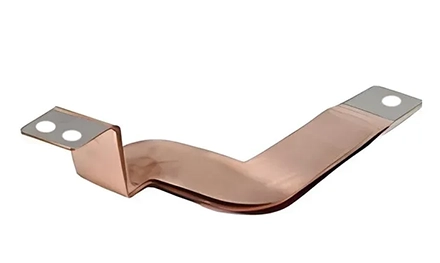
A rigid busbar made from solid copper or aluminium is the backbone of power distribution in electrical panels, switchgear, and battery packs. It carries high current with lower resistance and better heat dissipation than cable bundles. But in corrosive environments, the surface of a bare copper busbar degrades. Nickel plating solves that problem — but only if the plating thickness and the substrate purity meet the demands of the application.
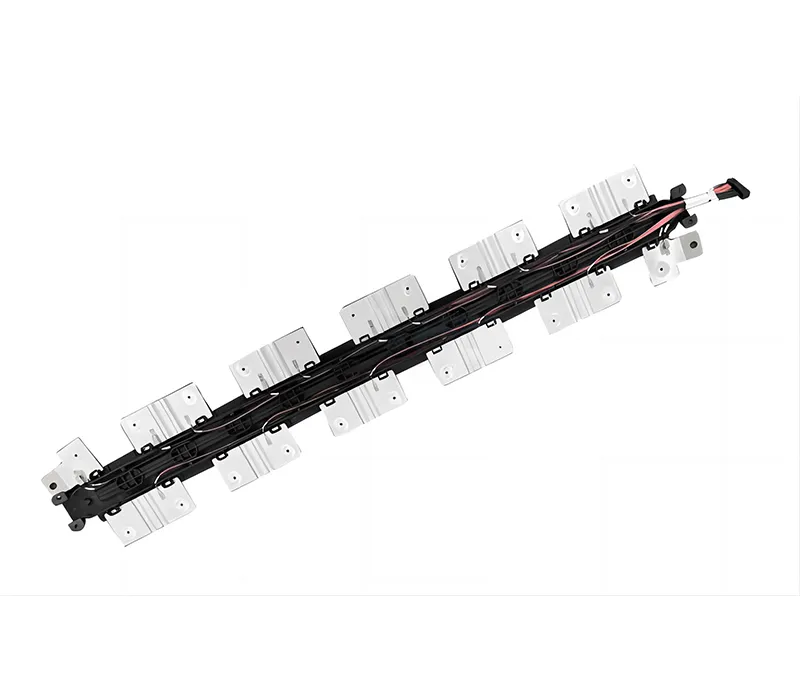
Haiyan New Energy’s nickel plated busbar starts with T2 low‑oxygen copper (purity ≥99.9%). The copper is rolled, bent, and punched to shape, then electroplated with a nickel layer ranging from 10 to 400 μm. The busbar is 100% dielectric tested to ensure insulation integrity before leaving the factory. This article explains why the combination of low‑oxygen copper and nickel plating prevents contact resistance creep, how the choice of insulation (PVC, PE, PA) changes the temperature rating, and where the nickel thickness specification — not just "yes or no" — matters.
A busbar is only as good as the metal underneath its coating. Standard copper contains oxygen that can cause hydrogen embrittlement during electroplating. The hydrogen absorption can lead to blistering or delamination, especially at elevated temperatures.
Haiyan uses T2 low‑oxygen copper with a purity exceeding 99.9% and carefully controlled oxygen content. The copper undergoes rigorous annealing before plating to eliminate internal stress from punching and bending. For a busbar used in an EV battery pack or a solar inverter, that stress relief prevents micro‑cracks from propagating during thermal cycling.
| Property | T2 Low‑Oxygen Copper | Standard Copper (C1100) |
|---|---|---|
| Purity | ≥99.9% | ~99.9% |
| Oxygen content | Controlled (<0.02%) | Higher |
| Plating adhesion | Excellent | Risk of blistering |
| Bending reliability | High (annealed) | Moderate |
| Application | Industrial, automotive, battery | General purpose |
The annealing step also ensures that the busbar maintains its mechanical strength after bending. A busbar that work‑hardens during formation can crack at the bend radius over time. The annealing restores ductility, so a nickel‑plated copper busbar bent to a complex shape stays intact through thousands of thermal cycles.
Nickel plating serves two functions. First, oxidation resistance: nickel does not react with oxygen or sulphur compounds the way bare copper does. Second, stable contact resistance: a passivated nickel surface does not form the high‑resistance oxide film that makes copper joints run hot.
The required nickel thickness depends on the application. A rigid busbar in a clean indoor electrical panel may need only 10‑15μm of nickel to prevent tarnishing during storage and installation. A busbar in a battery pack where the atmosphere may be slightly acidic, or a busbar in a seaside substation exposed to salt spray, needs 50‑100μm. For extreme environments — chemical plants, off‑shore platforms, high‑temperature industrial drives — Haiyan supplies nickel plating up to 400μm.
Plating a 400μm nickel layer onto a copper busbar requires extended electroplating time. If the copper substrate contains oxygen, hydrogen generated during plating can accumulate at grain boundaries. When the busbar heats up under load, the hydrogen releases, and the nickel layer blisters. T2 low‑oxygen copper eliminates that failure mode. The pre‑plating undercoat technology — a thin copper or nickel strike layer applied before the functional nickel — improves adhesion and prevents blistering even under thermal shock testing.
A nickel‑plated copper busbar for open‑air installation (switchgear, substation busbars) may not need insulation at all. But a busbar inside a battery pack, inverter, or control panel requires insulation to prevent short circuits between phases or to ground.
| Insulation Type | Voltage Rating | Temperature Range | Flame Retardant | Best For |
|---|---|---|---|---|
| PVC (Dipping) | 3500V AC | -40°C to 125°C | UL94 V-0 | Rigid and flexible busbars, special shapes |
| PE (Heat shrink) | 2700V AC | -40°C to 125°C | UL224 VW-1 | Rigid and flexible busbars, standard shapes |
| PA12 (Polyamide 12) | 5000V AC | -40°C to 150°C | UL94 V-0 | High‑performance rigid busbars |
| Epoxy powder coating | 5000V AC | -40°C to 150°C | UL94 V-0 | Rigid busbars in high‑temperature environments |
The insulation selection also affects the busbar’s overall system reliability. A rigid busbar (主词加粗第3次) that operates at 1500V DC in an EV battery pack needs at least 2700V AC rated insulation (PE heat shrink) to withstand the peak voltages and transients. For a busbar in a 690V AC industrial drive cabinet, PVC dipping with 3500V AC rating may be sufficient. Haiyan offers all four insulation types, as well as bare busbars with no insulation for applications where the busbar is mounted inside a fully enclosed, finger‑safe compartment.
A busbar that passes a visual inspection can still have a pinhole in the insulation. That pinhole may not cause an immediate short. Over months of thermal cycling, moisture wicks through the hole, the copper corrodes, and the insulation delaminates around the defect. The result is a phase‑to‑ground fault that trips the main breaker and shuts down an entire production line.
Haiyan performs a 100% dielectric test on every nickel‑plated busbar before shipment. The test voltage is typically 2‑3 times the rated voltage of the insulation. For a 3500V AC rated PVC‑dipped busbar, the hipot test may be conducted at 7‑10kV AC or DC for up to one minute. The busbar passes only if there is no dielectric breakdown, no arcing, and no current leakage beyond the test threshold. This test is factory‑performed on 100% of production, not just on a sample batch.
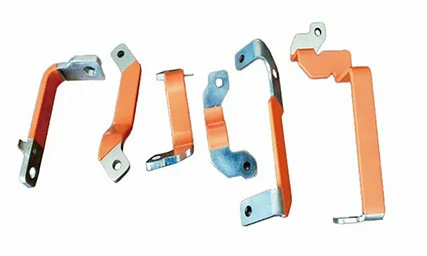
Haiyan New Energy (Zhejiang Haiyan New Energy Technology Co., Ltd.) has manufactured rigid and flexible copper busbars for new energy and industrial electrical systems. The product line includes nickel‑plated copper busbars with T2 low‑oxygen copper substrates, nickel layers from 10μm to 400μm, insulation options of PVC dipping, PE heat shrink, and PA12, 100% dielectric testing with test reports available per batch, and certifications including ISO 45001, ISO 14001, IATF 16949.
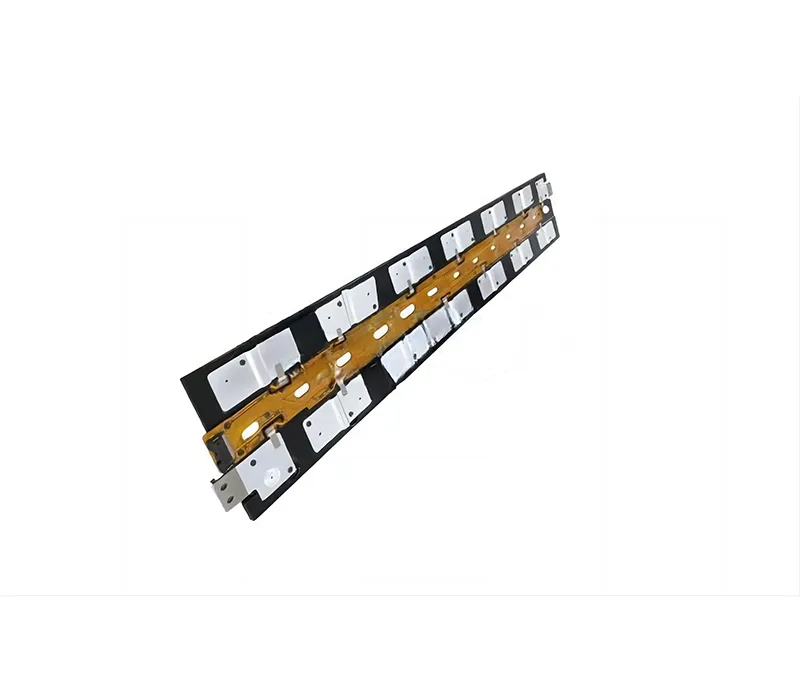
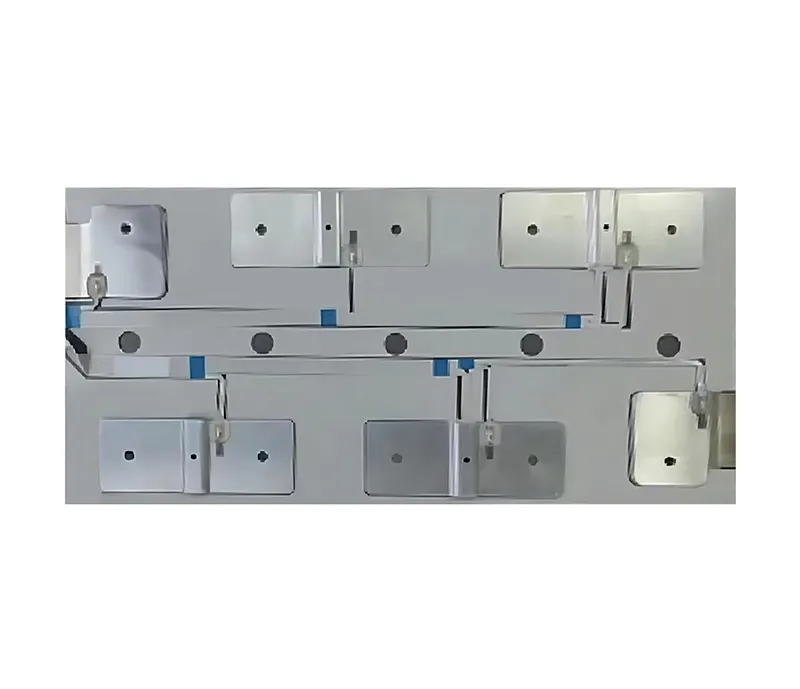
The nickel‑plated rigid busbar family covers cross‑sections from 10mm² to 1000mm², with custom bending, punching, and terminal shaping per customer drawing. Applications include high‑voltage battery packs, industrial switchgear, renewable energy inverters, and marine electrical systems.
For a rigid busbar that withstands sulphurous air, salt spray, and thermal cycling without contact drift, Haiyan’s nickel‑plated copper busbar delivers T2 low‑oxygen copper, 10‑400μm nickel plating, UL94 V‑0 insulation, and 100% dielectric testing — backed by a full certification package for the export market.
【Request a quote from Haiyan New Energy】
Send your busbar drawing (current rating in amps, cross‑section in mm², and environmental exposure class) to Haiyan for a nickel‑plated copper busbar quotation with a full test report package.
GET A QUOTE


 中文
中文 English
 Pусский
 Français
 Español