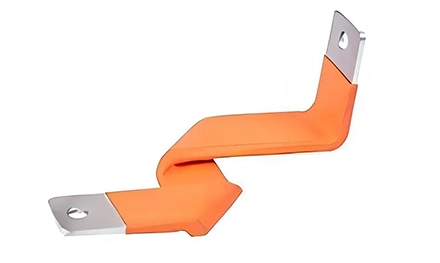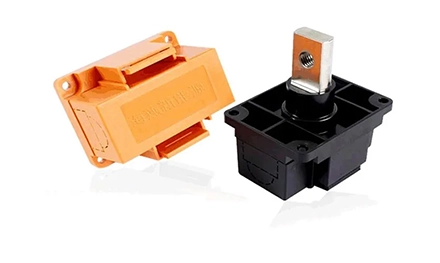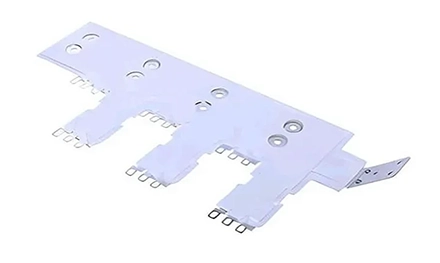


You're wiring a switchgear cabinet or a battery pack, and the route from the main bus to the breaker is awkward—a few bends, a tight offset, no room for a rigid bar and no patience for crimping cable lugs at every end. A Flexible Busbar solves that layout problem by using stacked layers of thin copper foil that bend by hand and bolt directly to the terminal. This article explains how the laminated construction carries current, why it eliminates terminal blocks, and what to verify when you're selecting one for a power distribution project.
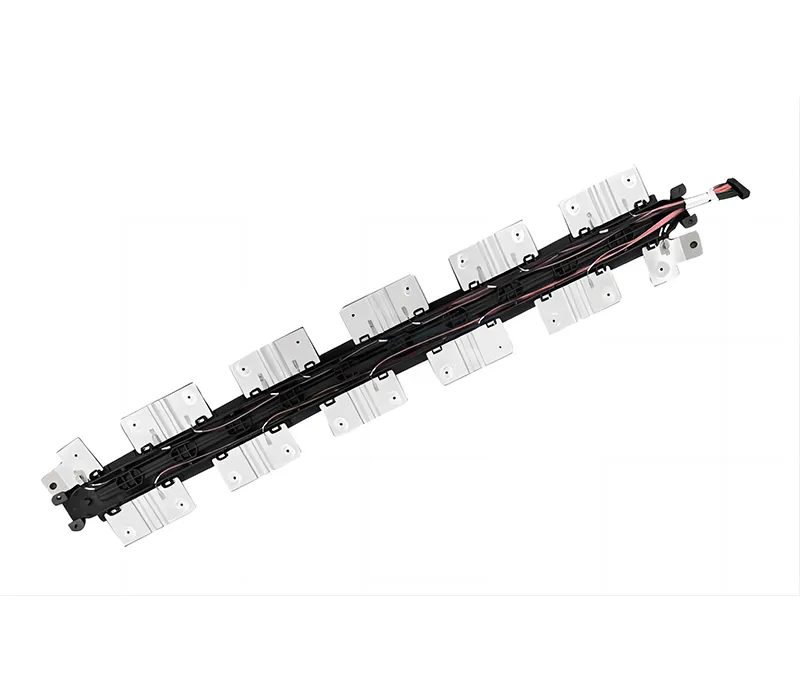
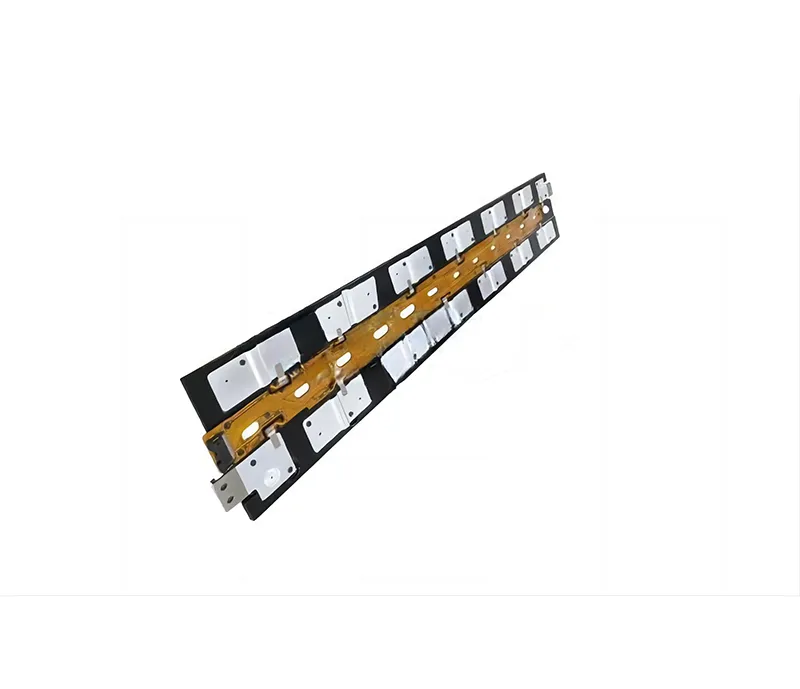
A flexible busbar comes in two common forms: laminated and braided. The laminated type stacks multiple thin electrolytic copper foils together, pressing them solid at the ends while leaving the middle section free to bend. The braided type weaves fine copper wires into a mesh.
The laminated structure eliminates the air gaps that exist between strands in a braided busbar. Because the foils sit flat against each other across the full width, current density is uniform through the cross-section. No single foil carries the full load, and the impedance is up to 30% lower than a braided alternative of comparable size.
Haiyan's flexible busbar uses 99.9% purity copper in multiple thin layers, with bare copper and tinned copper options available. The tinned option adds corrosion resistance at the connection points, which matters in humid or chemically exposed enclosures.
The insulation is a self-extinguishing material that allows closer spacing than conventional rigid busbar designs. That closer spacing is a space-saving advantage: you're not just replacing a cable, you're replacing the clearance distance that a cable bundle demands.
A traditional cable connection requires a terminal block, a crimped lug, and a torque-tightened screw. Each of those components introduces a failure point: a loose crimp, an under-torqued screw, or a terminal block that loosens under vibration. A German switchgear assembler quantified the labor cost of that sequence at over €40,000 per year across 500 cabinets.
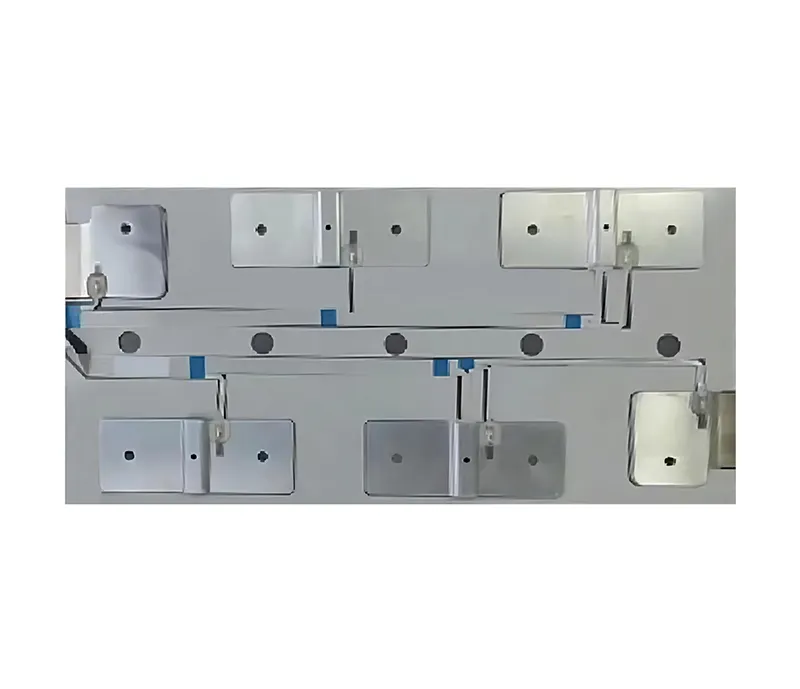
A flexible busbar changes the connection method. The laminated copper sheet is pierced directly and bolted to the terminal. There's no lug to crimp, no terminal block to mount, and no separate torque check on a crimped joint. The connection is bolted metal-to-metal, which reduces the component count and the associated failure modes.
Removing the terminal block step shortens the assembly sequence. The operator bends the busbar to the required shape, positions it, and tightens the bolt. There's no stripping, crimping, or lug inspection. For a panel shop building repetitive cabinets, that time saving compounds across every unit.
| Feature | Cable + Terminal Block | Flexible Busbar (Direct Piercing) |
|---|---|---|
| Connection method | Crimped lug + terminal block | Pierced foil + bolted terminal |
| Failure points | Crimp, screw, block mounting | Bolted joint only |
| Assembly steps | Strip, crimp, mount, torque | Bend, position, torque |
| Vibration resistance | Moderate (screw can loosen) | Excellent (no loose parts) |
| Inventory items | Cable, lugs, blocks | One busbar |
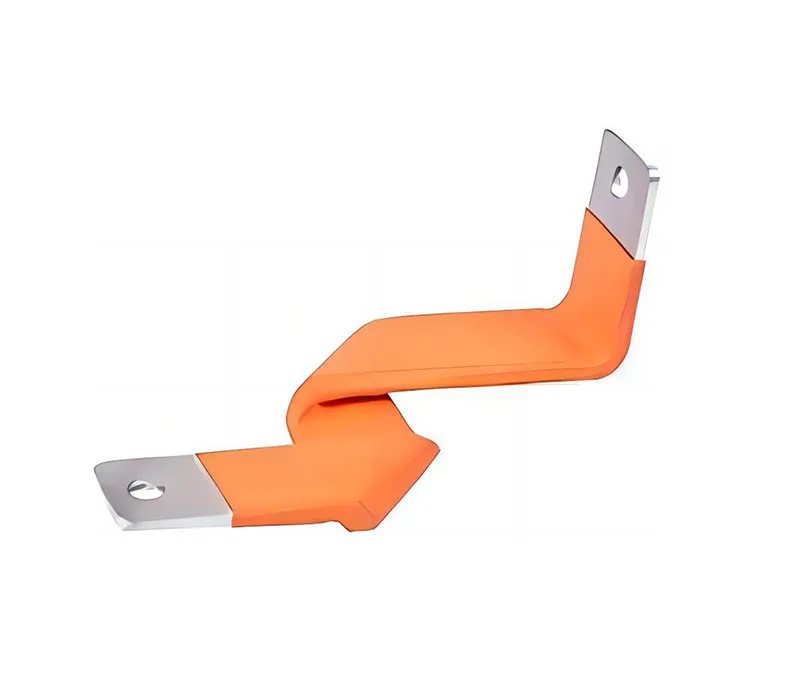
The Haiyan flexible busbar spans a width range from 24mm to 1200mm², covering applications from small battery modules to large industrial switchgear. The nominal voltage ratings are 1000V AC and 1500V DC under both IEC and UL standards, and the operating temperature range runs from -25°C to 105°C (-13°F to 221°F).
That temperature window covers the conditions inside switchgear enclosures, battery packs, and inverter cabinets. The self-extinguishing insulation and high mechanical strength of the foil stack support reliable performance across that range.
Ampacity in a laminated busbar is determined by the total copper cross-section, which is a function of foil thickness, width, and layer count. Industry configurations range from a few layers for compact connections up to multi-layer stacks for high-current paths. A 6-layer, 40mm-wide configuration can carry around 800A; wider and thicker stacks extend into the thousands of amps.
The exact ampacity for a given Haiyan part depends on the width and layer specification selected for the project. The design process matches the conductor size to the continuous current and the allowable temperature rise inside the enclosure.
A Flexible Busbar is used wherever a conductor has to absorb movement, compensate for tolerance stack-up, or route through a tight space without a rigid bend. That covers switchgear cabinets, battery module interconnects, inverter DC links, and industrial control panels.
In a battery pack, the busbar connects cell terminals that may shift slightly under thermal cycling. In an inverter, it carries high DC current from the input stage to the switching devices while accommodating the mechanical tolerance between components. In switchgear, it replaces cable bundles that would otherwise require terminal blocks at every end.
The laminated structure distributes mechanical stress across all foils during bending, rather than concentrating it on individual strands. That distribution gives the busbar excellent vibration resistance and allows it to absorb thermal expansion without transferring stress to the terminals.
A Flexible Busbar from Haiyan New Energy uses this laminated construction with direct-piercing connection, covering widths from 24mm to 1200mm² at 1000V AC / 1500V DC ratings. The company produces the busbar as part of a broader range of new-energy connection components, with customization available for specific project layouts.
Start with the continuous current and the allowable temperature rise. Use the manufacturer's ampacity table for the specific width and layer configuration, then verify the voltage drop across the run. A busbar that runs too close to its thermal limit will heat the enclosure and stress the insulation. If the current is close to the limit, step up to a wider or thicker stack.
Bare copper offers the lowest resistance at the connection point, but it oxidizes over time in humid environments. Tinned copper adds a corrosion-resistant layer that maintains a stable contact surface. For indoor switchgear with controlled humidity, bare copper is often adequate. For battery packs, outdoor enclosures, or washdown areas, tinned copper is the safer specification.
The Haiyan design uses direct piercing: the laminated copper sheet is pierced and bolted directly to the terminal surface, without a separate lug or terminal block. The bolt torque should follow the manufacturer's specification for the busbar width and terminal material. Check the joint for flatness before tightening—a warped terminal surface reduces contact area and raises resistance.
Inspect the connection points for discoloration or looseness during periodic maintenance. Check the insulation jacket for cuts or abrasion, especially at bend points and where the busbar passes through enclosure walls. Verify that the bolt torque remains within specification after thermal cycling. Unlike a crimped cable lug, the bolted connection can be re-torqued if it loosens.
Yes, in many power distribution applications. A single flexible busbar can replace multiple round conductors because the flat laminated profile carries the same current in a smaller cross-section, and it eliminates the terminal blocks and lugs that a cable bundle requires. The trade-off is that the busbar has to be specified for the exact current and voltage of the circuit—it's less forgiving of oversizing than a cable.
Laminated foil eliminates the air gaps between strands, which gives uniform current density and up to 30% lower impedance compared to braided wire. A braided busbar is better for grounding straps and low-current flexing applications, but for high-current power distribution, the laminated stack carries more current with less heat and a longer service life under vibration.
Haiyan's flexible busbar uses a self-extinguishing insulation jacket. The insulation allows closer spacing than conventional rigid busbar, which contributes to the space-saving advantage. For applications that require a specific flame rating or chemical resistance, confirm the insulation material specification with the manufacturer before ordering.
Yes. The flexible section is designed to be bent by hand to fit the layout. The foils slide against each other during bending, which distributes the mechanical stress across the entire cross-section rather than concentrating it at a single point. Bend radii should follow the manufacturer's recommendation—tight bends can fatigue the foil edges even if the electrical performance remains intact.
A Flexible Busbar should match your continuous current, system voltage, and the physical routing inside the enclosure—not the other way around. The Busbar Flexible from Haiyan New Energy uses laminated 99.9% purity copper foils with direct-piercing connections, covers widths from 24mm to 1200mm², and carries 1000V AC / 1500V DC ratings across a -25°C to 105°C operating range. If you're replacing cable bundles or rigid bars in switchgear, battery modules, or inverter cabinets, send us your current, voltage, and routing requirements — we'll help you confirm the right width and layer configuration before you order.
GET A QUOTE


 中文
 English
 Pусский
 Français
 Español