

You're designing a battery system — for a new energy vehicle, an energy storage unit, or an industrial power distribution network. The terminals are the most vulnerable points in the system: exposed to moisture, dust, vibration, and accidental contact. A PVC battery terminal covers solution provides simple but essential protection: it insulates, seals, and shields battery connections from the hazards that cause shorts, corrosion, and premature failure. This guide covers what PVC battery terminal covers do, the material properties that make PVC the right choice, the applications where they're essential, and what to look for when selecting terminal protection for your battery system.
A PVC battery terminal cover performs three critical functions simultaneously. First, it provides electrical insulation — preventing accidental contact with live terminals that could cause shocks or sparks. Second, it prevents corrosion by shielding the terminal from moisture, dust, and airborne contaminants. Third, it reduces the risk of short circuits by keeping conductive objects — tools, metal parts, or stray wires — away from exposed terminals.
PVC is a naturally insulating material with high dielectric strength, preventing current leakage and protecting personnel from accidental contact with live terminals.
Battery terminals are susceptible to corrosion from moisture, acid fumes, and environmental exposure. PVC covers create a barrier that blocks these corrosive agents, extending terminal life and maintaining connection integrity.
Exposed terminals are a short-circuit hazard. A dropped tool, loose cable, or stray metal object can create an arc that damages equipment or causes injury. PVC covers eliminate this risk by fully enclosing the terminal.
PVC (polyvinyl chloride) is the preferred material for battery terminal covers because of its unique combination of properties. It's soft and flexible enough to fit snugly over terminals, yet durable enough to withstand years of service. PVC offers good chemical resistance against battery acids and automotive fluids, high-temperature tolerance from 70°C to 105°C, voltage resistance up to 2000V, and excellent toughness and tear resistance.
PVC terminal covers maintain their protective properties across a wide temperature range, typically from -40°C to 125°C. They provide electrical insulation up to 2000V, making them suitable for most automotive and industrial battery systems. They are resistant to high temperatures, are not easy to break, and have good insulation and protection performance.
PVC is soft, wear-resistant, and high-temperature resistant. It provides good toughness and durability and is not easy to tear or break. The material is UV-resistant and withstands exposure to ozone, oils, and greases commonly found in automotive and industrial environments.
PVC battery terminal covers deliver five key benefits that make them the standard choice for terminal protection:
Insulation: Prevents electrical shorts and protects against accidental contact
Corrosion resistance: Shields terminals from moisture, acid, and environmental degradation
Dust and moisture protection: Seals terminals against dirt, debris, and water ingress
Flame retardancy: Meets safety standards including UL94V-0
Ease of installation: Snaps on quickly without tools
These covers are durable, stable, and very reliable, with good flame retardant characteristics and insulating and dustproof properties.
PVC battery terminal covers are used across a wide range of industries and applications:
New energy vehicles: Protecting battery pack terminals in EVs and hybrids from vibration, moisture, and accidental contact
Energy storage systems: Insulating connections in stationary battery banks for grid storage and backup power
Industrial equipment: Protecting terminals in forklifts, AGVs, and other battery-powered machinery
Power transmission and distribution: Insulating high and low voltage electrical connections in substations and switchgear
Mining and explosion-proof equipment: Providing additional safety in hazardous environments
Rail transportation: Protecting battery connections in trains and light rail vehicles
The covers are widely used across high and low voltage electrical appliances, vacuum electrical appliances, new energy vehicles, transportation, and new power grid systems.
Battery terminal covers are not one-size-fits-all. They can be customized to match the specific requirements of your application.
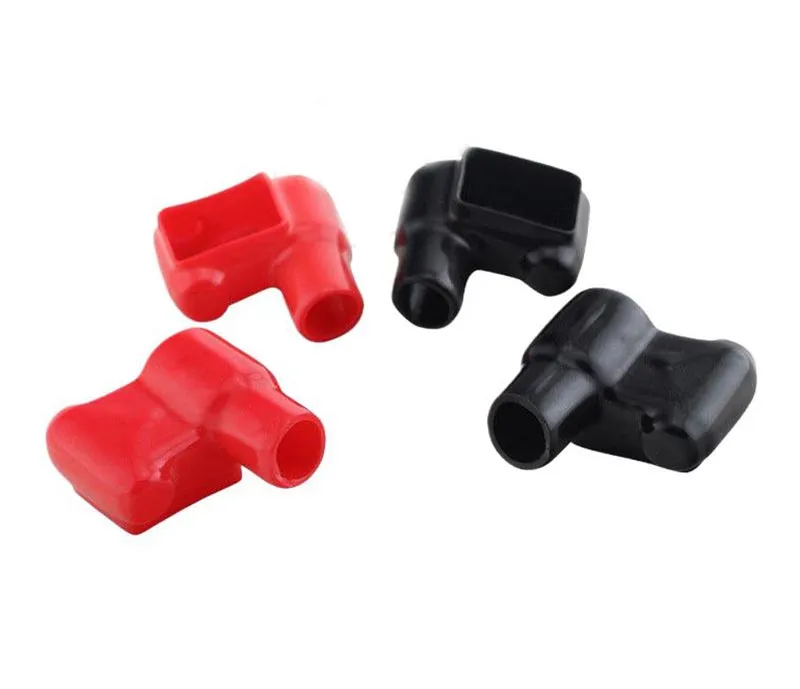
Covers can be produced in customized shapes and can process irregular shapes to fit non-standard terminal geometries. Whether your terminal is round, square, or an unusual form, the cover can be designed to fit precisely.
Available in red and black for positive and negative polarity identification, with other colors available on request. Material options include standard PVC, flame-retardant PVC, and other insulation materials.
Customization is available based on user drawings. The process includes design review and technical evaluation, sample production and verification, and full production upon approval.
| Specification | Typical Value | Why It Matters |
|---|---|---|
| Material | PVC (polyvinyl chloride) | Flexibility, durability, chemical resistance |
| Temperature range | -40°C to 125°C | Performance across extreme environments |
| Voltage resistance | Up to 2000V | Electrical safety for high-voltage systems |
| Flame retardancy | UL94V-0 | Fire safety compliance |
| Colors | Red, black (custom available) | Polarity identification |
| Shape | Customized, irregular | Fits any terminal geometry |
| Applications | EV, energy storage, industrial, grid | Versatile across industries |
What material are battery terminal covers made from?
PVC battery terminal covers are made from high-quality PVC (polyvinyl chloride), which is soft, durable, stable, and reliable. They are wear-resistant, high-temperature resistant, and have good insulation and protection performance.
What temperature range can PVC terminal covers withstand?
PVC terminal covers typically operate from -40°C to 125°C. This range covers most automotive, industrial, and outdoor applications, from cold climates to high-temperature engine compartments.
What voltage rating do they have?
They resist voltage up to 2000V, making them suitable for most automotive and industrial battery systems.
Can they be customized?
Yes. Customization is available based on user drawings. Options include custom shapes, sizes, colors, and material formulations.
Selecting PVC battery terminal covers comes down to three factors: shape and size (match your terminal geometry), temperature range (match your operating environment), and color (match your polarity identification needs). Contact Haiyan New Energy for a customized quote → —their team can help you select the right PVC terminal cover configuration for your specific battery system requirements.
Haiyan New Energy has over 20 years of expertise in electrical connection solutions for power transmission, new energy vehicles, energy storage, rail transit, wind power, and heavy machinery. The Battery Post Covers are made from high-quality PVC, providing insulation, corrosion resistance, and short-circuit protection for battery terminals. Available in red and black for polarity identification, with custom shapes and sizes available based on user drawings. Applications include new energy vehicles, energy storage systems, industrial equipment, power transmission, mining, and rail transportation. Haiyan New Energy provides comprehensive technical support, rapid sampling and customization, internationally certified quality, automated production excellence, and 24/7 support. Connect with Haiyan New Energy to discuss your terminal cover requirements, application environment, and customization needs.
GET A QUOTE


 中文
中文 English
 Pусский
 Français
 Español