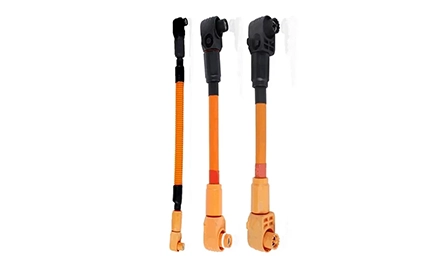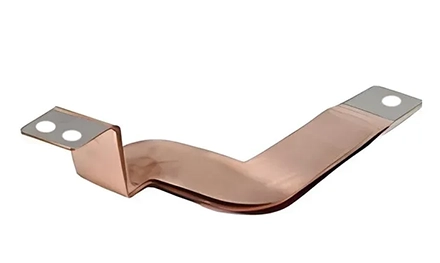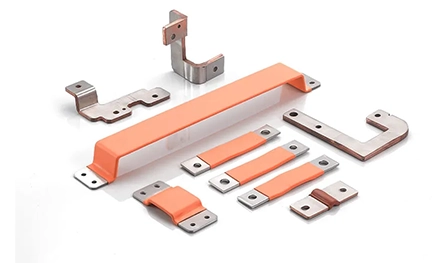


You're designing a power distribution system for an electric vehicle battery pack, an inverter assembly, or an industrial switchgear cabinet. The goal is to deliver high current efficiently, reliably, and with minimal space. A rigid busbar offers a fundamentally different approach than traditional cable wiring: it's a solid copper conductor that provides a low-impedance, low-resistance current path, reducing heat generation and improving overall system efficiency. The Nickel Plated Copper Bus Bar from Haiyan New Energy is one example—a rigid, high-purity copper bar with a thin nickel plating that enhances corrosion resistance without compromising conductivity. This guide covers the key advantages, material properties, plating options, applications, and selection criteria—so you can evaluate whether a rigid busbar is the right choice for your power distribution needs.
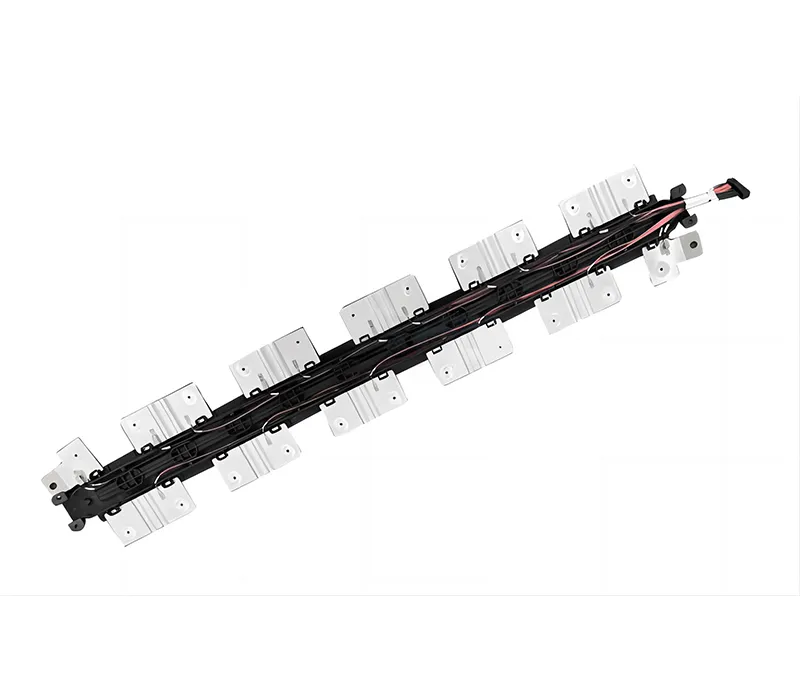
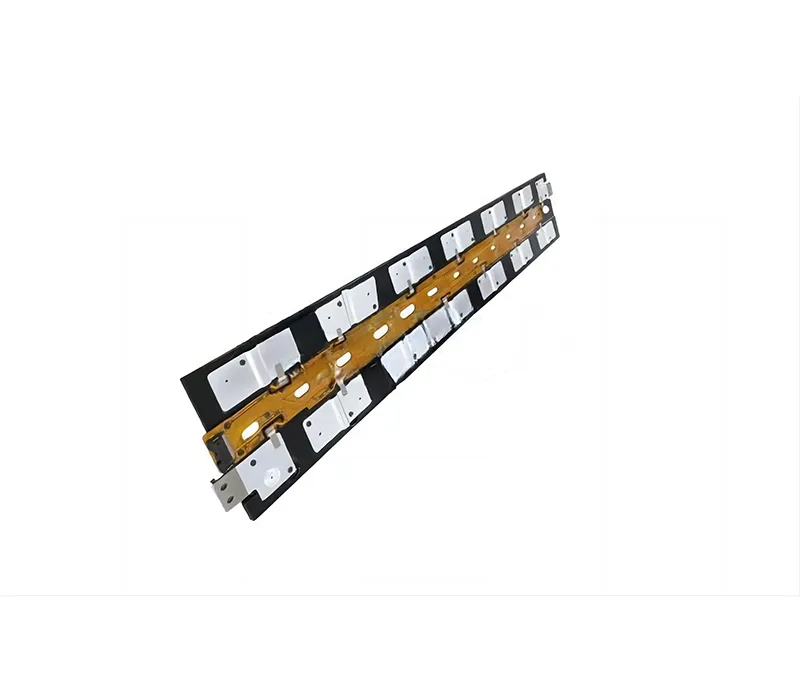
A rigid busbar is a solid conductive bar—typically made of high-purity copper or aluminum—that distributes power within electrical equipment. Unlike flexible cables, a rigid busbar maintains its shape, provides consistent electrical performance, and can be precisely engineered to fit the available space. The Nickel Plated Copper Bus Bar features a body made of high-purity copper with low resistance, ensuring stable current transmission.
Cable terminations introduce resistance points that generate heat. A rigid busbar eliminates many of these connection points, resulting in lower overall resistance and less heat generation. This translates to higher system efficiency and longer component life.
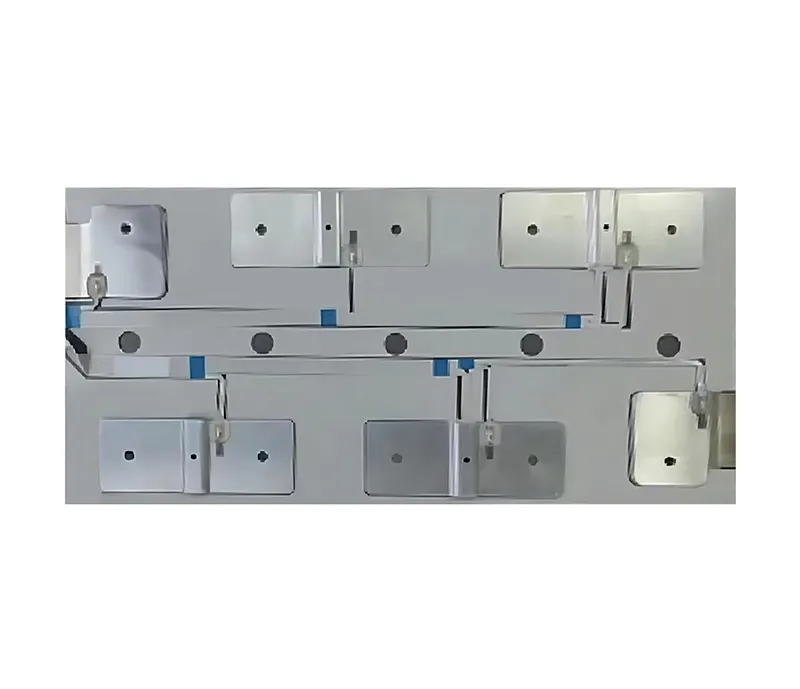
Rigid busbars can be shaped, bent, and customized to fit tight spaces. They also support a much cleaner, more organized layout than a bundle of cables—critical in dense assemblies like EV battery packs.
The choice of conductor material and plating determines the busbar's electrical and mechanical performance. Copper is the standard for high-conductivity applications, offering approximately 97% IACS conductivity.
The busbar body is made from high-purity copper (C11000 or similar grades), offering low resistivity and high current-carrying capacity. The base material is typically available in bare, nickel-plated, tin-plated, or silver-plated configurations.
The thin nickel plating layer provides significant corrosion resistance without affecting the busbar's overall conductivity. This makes nickel-plated busbars suitable for demanding environments where moisture or chemicals are present.
Nickel-plated copper busbars offer mechanical strength in the range of 245-345 MPa, providing durability and resistance to deformation during installation and operation.
Rigid busbars are critical components across multiple high-power applications.
Nickel-plated copper busbars are commonly used in EV battery pack power distribution and energy storage system busbar modules. They connect cells and modules, carrying high current with minimal loss.
Inverters convert DC to AC and handle significant current loads. Rigid busbars provide a low-inductance connection between power semiconductors and DC-link capacitors.
Industrial switchgear and power distribution units use rigid busbars to distribute power from a main source to multiple branch circuits.
Solar inverters and wind turbine converters require high-current connections that rigid busbars deliver efficiently.
One of the key advantages of rigid busbars is the ability to customize them to your exact specifications.
Busbars can be manufactured in custom thicknesses, widths, lengths, and shapes. Flat, bent, or formed configurations are available to match your specific layout requirements.
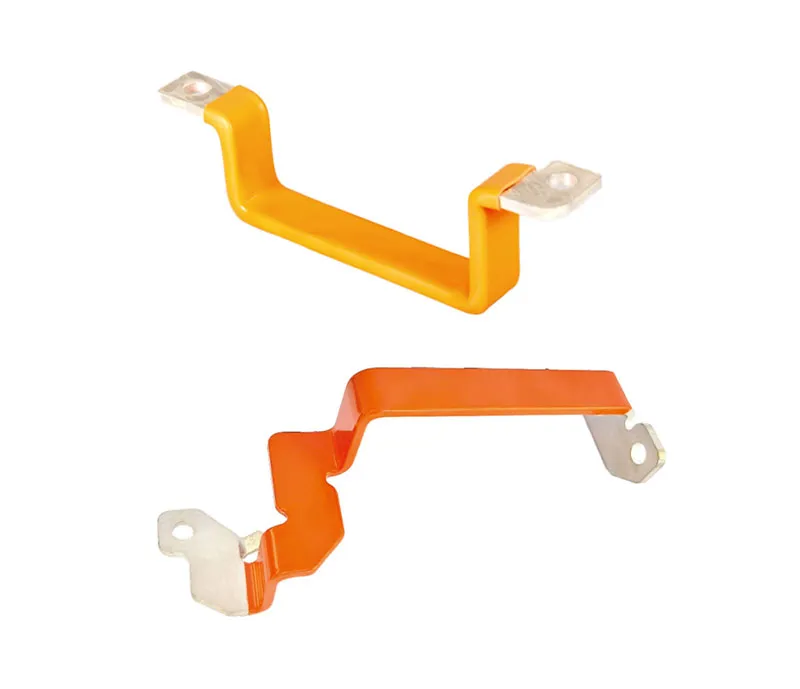
Choose from bare copper, nickel plating, tin plating, or silver plating depending on your environment and performance requirements. Insulation options include PVC, PE heat-shrink tubing, and epoxy powder coating.
Additional features may include welded or brazed connections, push nuts, studs, and terminals.
| Specification | Typical Value | Why It Matters |
|---|---|---|
| Base material | C11000 copper or equivalent | High conductivity (97% IACS) |
| Plating | Nickel, tin, silver, or bare | Corrosion resistance and conductivity |
| Conductivity | ~97% IACS | Efficient current transmission |
| Mechanical strength | 245-345 MPa | Durability and deformation resistance |
| Thickness | Customizable | Matches current-carrying requirements |
| Shape | Flat, bent, formed | Fits specific layout requirements |
| Insulation | PVC, PE, epoxy | Electrical safety and protection |
What is the difference between bare copper and nickel-plated copper busbars?
Bare copper offers maximum conductivity but is susceptible to corrosion in humid or chemically active environments. Nickel plating adds a protective layer that significantly enhances corrosion resistance while maintaining conductivity.
What materials are used in a rigid busbar?
High-purity copper (typically C11000) with a nickel, tin, or silver plating. Some applications use aluminum busbars for weight reduction.
What is the typical conductivity?
Copper busbars offer approximately 97% IACS conductivity. Nickel plating does not significantly reduce overall conductivity.
Can busbars be customized for specific applications?
Yes. Custom dimensions, shapes, plating options, and insulation are available.
Selecting a rigid busbar comes down to three factors: material and plating (match your environment), dimensions (match your space), and current rating (match your load). Contact Haiyan New Energy for a custom quote → —their team can help you select the right Nickel Plated Copper Bus Bar configuration for your specific power distribution needs.
Haiyan New Energy is a manufacturer of electrical connection solutions for power transmission, new energy vehicles, energy storage, rail transit, wind power, and heavy machinery. The Nickel Plated Copper Bus Bar features a high-purity copper body with low resistance for stable current transmission, a thin nickel plating for enhanced corrosion resistance without compromising conductivity, and mechanical strength of 245-345 MPa. Applications include EV battery systems, inverter assemblies, power distribution units, industrial switchgear, and high-current electrical equipment. Haiyan provides OEM and ODM services with customization available for dimensions, plating options, and insulation requirements. Connect with Haiyan New Energy to discuss your busbar specifications, current requirements, and application environment.
GET A QUOTE


 中文
中文 English
 Pусский
 Français
 Español