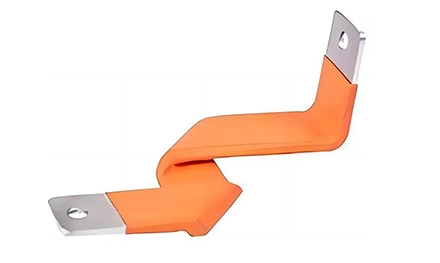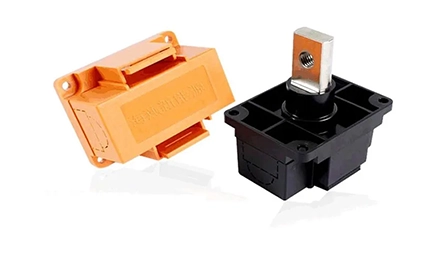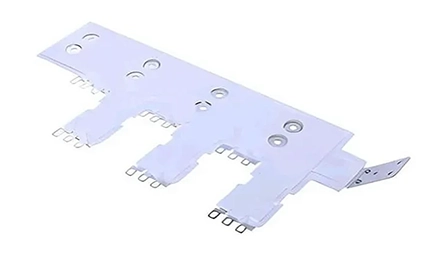


You're designing a power distribution system for an electric vehicle, a railway application, or an energy storage installation—and every connection point is a potential failure point. A flexible busbar that eliminates terminal blocks and cable lugs changes that equation entirely. The flexible copper busbar from ZHONGYAN was engineered with reliability as the priority: a direct-connection design that eliminates terminal block failures, outstanding vibration and shock resistance that withstands severe mechanical stress, and self-extinguishing arc properties that enhance safety. This article walks through what makes this busbar a more reliable choice than traditional cables and terminal blocks—from the failure points it eliminates to the vibration resistance that keeps connections secure in the toughest environments.
Q: What makes a flexible busbar more reliable than a cable with terminal blocks?
A: Traditional cable connections rely on terminal blocks, lugs, and crimps—each a potential failure point. The flexible busbar is directly connected, eliminating the cable lug connection and the need for terminal blocks. This removes the most common sources of faulty connections: loose terminal blocks, improperly crimped lugs, and corrosion at connection points.
Q: How does the busbar handle vibration and mechanical shock?
A: The flexible busbar features a unique flexible connection design combined with an anti-vibration reinforcement process. It can work stably in severe vibration, mechanical shock, or temperature change environments, ensuring system safety and continuity. This makes it ideal for electric vehicles, rail transit, and other mobile applications where vibration is constant.
Q: What electrical and thermal properties contribute to reliability?
A: The busbar uses high-purity electrolytic copper (99.9% purity) with a multi-layer flexible lamination structure that significantly reduces resistance loss. It offers ultra-low insulation resistance voltage drop, efficient thermal management through optimized conductive cross-section and heat dissipation design, and is self-extinguishing for arc safety.
Traditional power distribution systems rely on multiple components: cables, lugs, terminal blocks, heat shrink, and torque checks. Each component adds a potential failure point. The flexible busbar eliminates most of them.
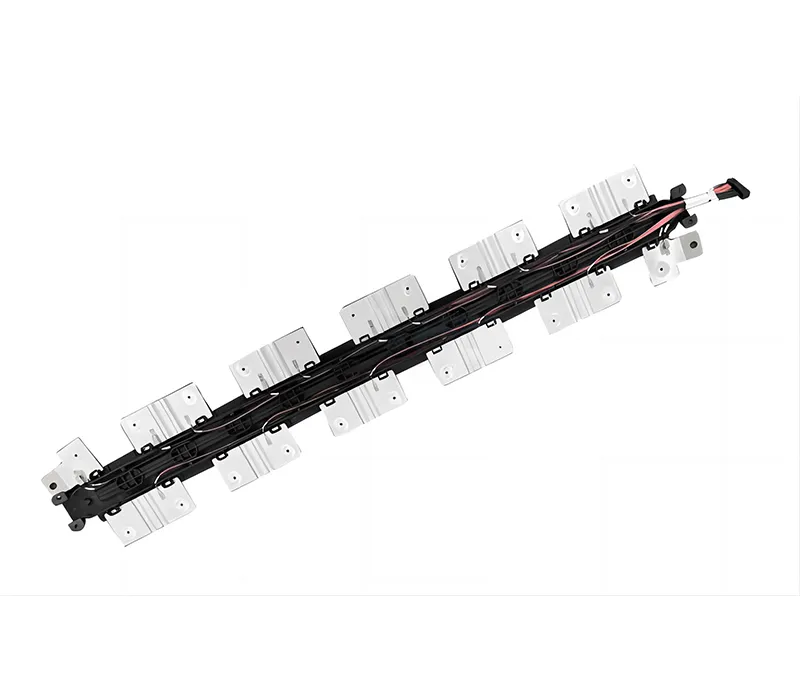
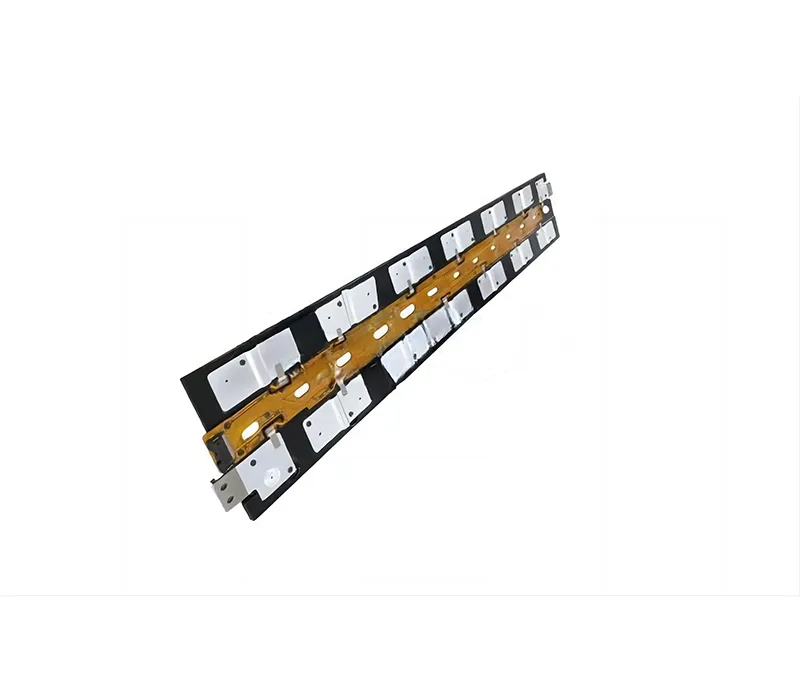
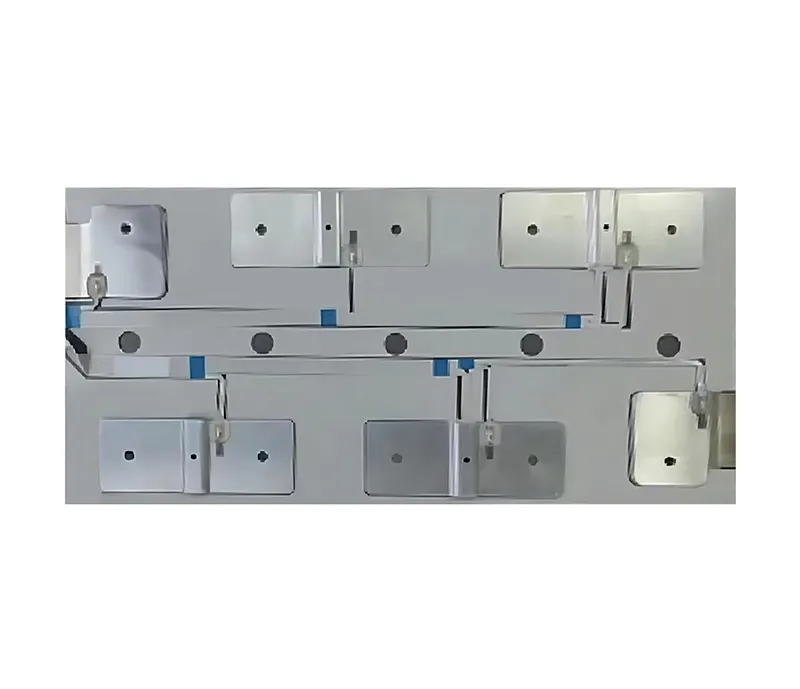
Terminal blocks are one of the most common sources of electrical failure. Vibration loosens connections over time. Thermal cycling creates expansion and contraction that works fasteners loose. Corrosion degrades contact surfaces. The flexible busbar eliminates terminal blocks entirely. Connection is achieved by directly piercing the laminated copper sheet—no terminal blocks, no loose connections, no failure points.
Crimped lugs require the right tool, the right technique, and the right inspection. A poor crimp creates high resistance, generates heat, and eventually fails. The flexible busbar eliminates crimping entirely. There's no lug to crimp, no heat shrink to apply, no torque wrench to calibrate—just a direct, bolted connection.
In electric vehicles, rail transit, and mobile equipment, vibration is constant. Traditional connections work loose over time. The flexible busbar's anti-seismic and shock-resistant structure is designed for these environments. The unique flexible connection design combined with an anti-vibration reinforcement process allows the busbar to work stably in severe vibration, mechanical shock, or temperature change environments.
The flexible busbar is directly connected, eliminating the cable lug connection and the need for terminal blocks. This isn't a marginal improvement—it's a fundamental change in how power connections are made.
Terminal blocks require multiple connection points: the wire to the terminal, the terminal to the busbar, and the busbar to the next component. Each is a potential failure point. The flexible busbar eliminates the terminal block entirely. The connection is made directly—fewer components, fewer failure points, higher reliability.
Crimped lugs require the right tool, the right pressure, and the right inspection. A single bad crimp can create a failure that takes down an entire system. The flexible busbar eliminates lugs and crimping. The connection is made by bolting directly to the device terminal—consistent, repeatable, and reliable.
A cable assembly requires cable, lugs, heat shrink, and possibly terminal blocks. The flexible busbar is a single component that includes the conductor and insulation. Fewer components mean fewer failure points, simpler inventory, and faster installation.
The flexible busbar's outstanding vibration and shock resistance makes it the preferred choice for applications where vibration is constant.
In electric vehicles, rail transit, and mobile equipment, vibration is constant. Traditional connections work loose over time. Terminal blocks loosen. Crimped lugs fatigue. The result is intermittent connections, arcing, heat generation, and eventual failure.
The flexible busbar features a unique flexible connection design combined with an anti-vibration reinforcement process. It can work stably in severe vibration, mechanical shock, or temperature change environments, ensuring system safety and continuity. The flexibility allows the busbar to absorb movement without transferring stress to the connection points.
Beyond vibration, the busbar withstands temperature changes. Thermal cycling causes expansion and contraction that can loosen traditional connections. The flexible busbar maintains its integrity across temperature variations, ensuring consistent performance in demanding environments.
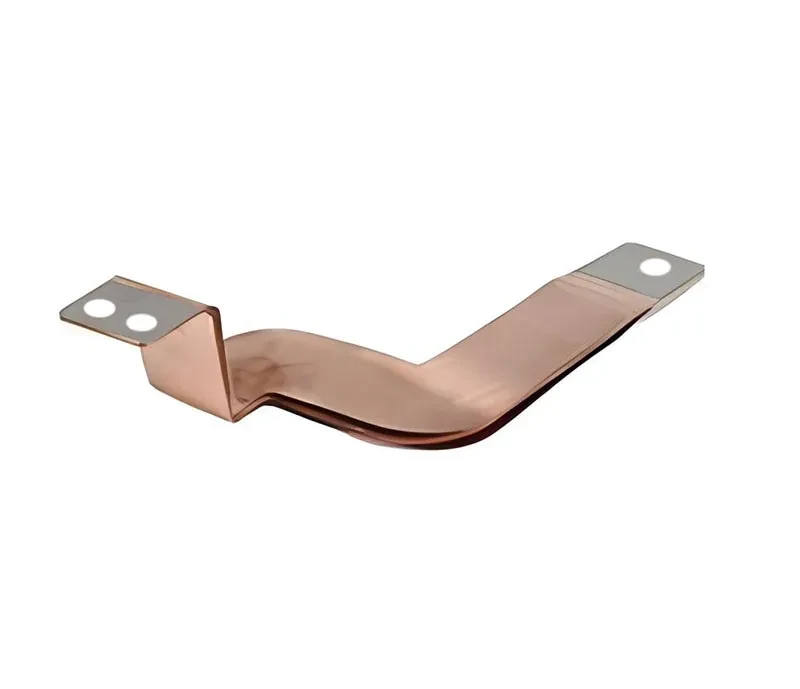
The flexible busbar's reliability extends beyond mechanical connections to its electrical and thermal properties.
The busbar uses high-purity electrolytic copper (99.9% purity) with a multi-layer flexible lamination structure. This design significantly reduces resistance loss, ensuring efficient transmission of electric energy and reducing energy waste.
The busbar is self-extinguishing, providing arc protection that enhances system safety. In the event of a fault, the material resists flame propagation, containing the damage and protecting surrounding components.
The optimized conductive cross-section and heat dissipation design, combined with high-temperature resistant insulation materials, effectively disperse heat. This prevents hot spots that can degrade insulation and cause premature failure.
| Parameter | Flexible Copper Busbar Specification |
|---|---|
| Construction | Multi-layer thin electrolytic copper, laminated |
| Material Options | Common copper, tinned copper |
| Connection Method | Direct bolt connection — no terminal blocks required |
| Vibration Resistance | Outstanding — anti-seismic and shock-resistant structure |
| Size Range | 24mm to 1200mm |
| Nominal Voltage | 1000VAC / 1500VDC (IEC and UL) |
| Operating Temperature | -25°C to 105°C |
| Copper Purity | 99.9% |
| Key Features | Self-extinguishing, high mechanical strength, high elongation, high withstand current |
The flexible busbar is ideal for compact, high-density electrical systems, offering adaptable, efficient connections in power distribution, energy storage, and industrial applications:
In EV battery packs and power distribution systems, space is limited and connections must accommodate movement and vibration. The flexible busbar's outstanding vibration resistance and direct-connection design make it the reliable choice for automotive applications where failure is not an option.
Railway applications demand components that can withstand severe vibration, mechanical shock, and temperature changes. The flexible busbar's anti-seismic and shock-resistant structure ensures system safety and continuity in these demanding environments.
Energy storage systems require connections that remain reliable over years of continuous operation. The flexible busbar's elimination of terminal blocks and vibration resistance make it suitable for these demanding applications.
A: Unlike cables that rely on terminal blocks and lugs which can loosen over time, the flexible busbar features a unique flexible connection design combined with an anti-vibration reinforcement process. It works stably in severe vibration, mechanical shock, or temperature change environments, ensuring system safety and continuity. It offers excellent vibration resistance that traditional cable connections cannot match.
A: Terminal blocks introduce multiple failure points—loose connections, corrosion, and thermal cycling. The flexible busbar is directly connected, eliminating the cable lug connection and the need for terminal blocks. This removes the most common sources of faulty connections and makes installation more convenient and fast.
A: The busbar uses high-purity electrolytic copper (99.9% purity) with a multi-layer flexible lamination structure that significantly reduces resistance loss. It offers ultra-low insulation resistance voltage drop, ensuring efficient power transmission and reducing energy waste. It is also self-extinguishing for arc safety.
A flexible busbar that combines direct-connection reliability, outstanding vibration resistance, and superior electrical performance is the practical choice for any power distribution system where failure is not an option. The flexible copper busbar from ZHONGYAN delivers direct bolt connection that eliminates terminal blocks, lugs, and crimping, outstanding vibration and shock resistance for mobile and dynamic applications, high-purity electrolytic copper (99.9%) for low resistance and efficient power transfer, self-extinguishing arc protection for enhanced safety, a size range from 24mm to 1200mm with 1000VAC/1500VDC rating, and applications spanning EVs, rail transit, energy storage, and industrial systems.
Whether you're designing EV battery interconnects, railway power systems, or energy storage installations, the flexible busbar offers the reliability that engineers require in the most demanding environments. With advanced digital technology production lines and internationally certified quality, ZHONGYAN provides custom solutions tailored to your specific requirements.
Contact ZHONGYAN for a custom busbar solution → their team can help you select the right size, material, and configuration for your specific application requirements. Get a flexible busbar that delivers reliability you can count on—even when the conditions are at their worst.
GET A QUOTE


 中文
中文 English
 Pусский
 Français
 Español